
Liminal; of, relating to, or being an intermediate state, phase, or condition.
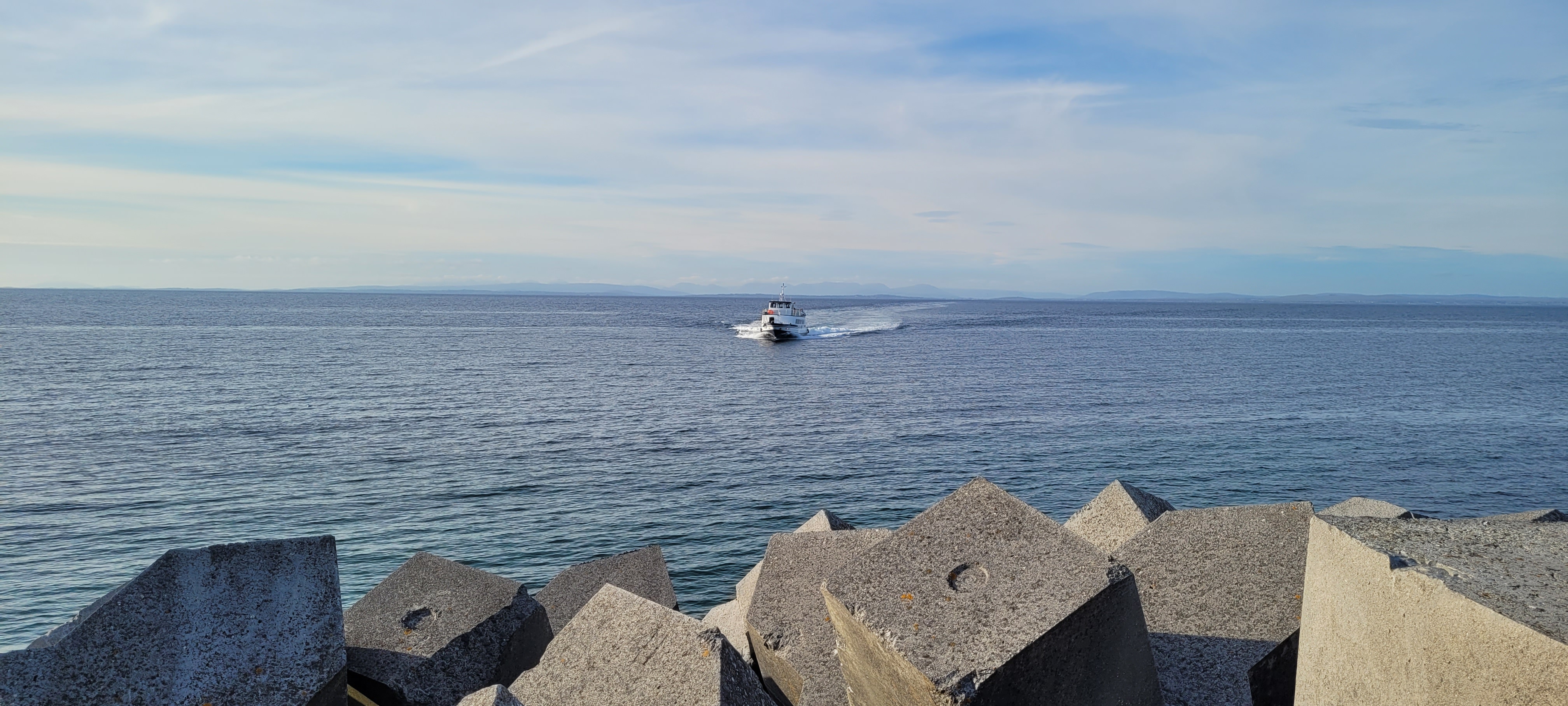
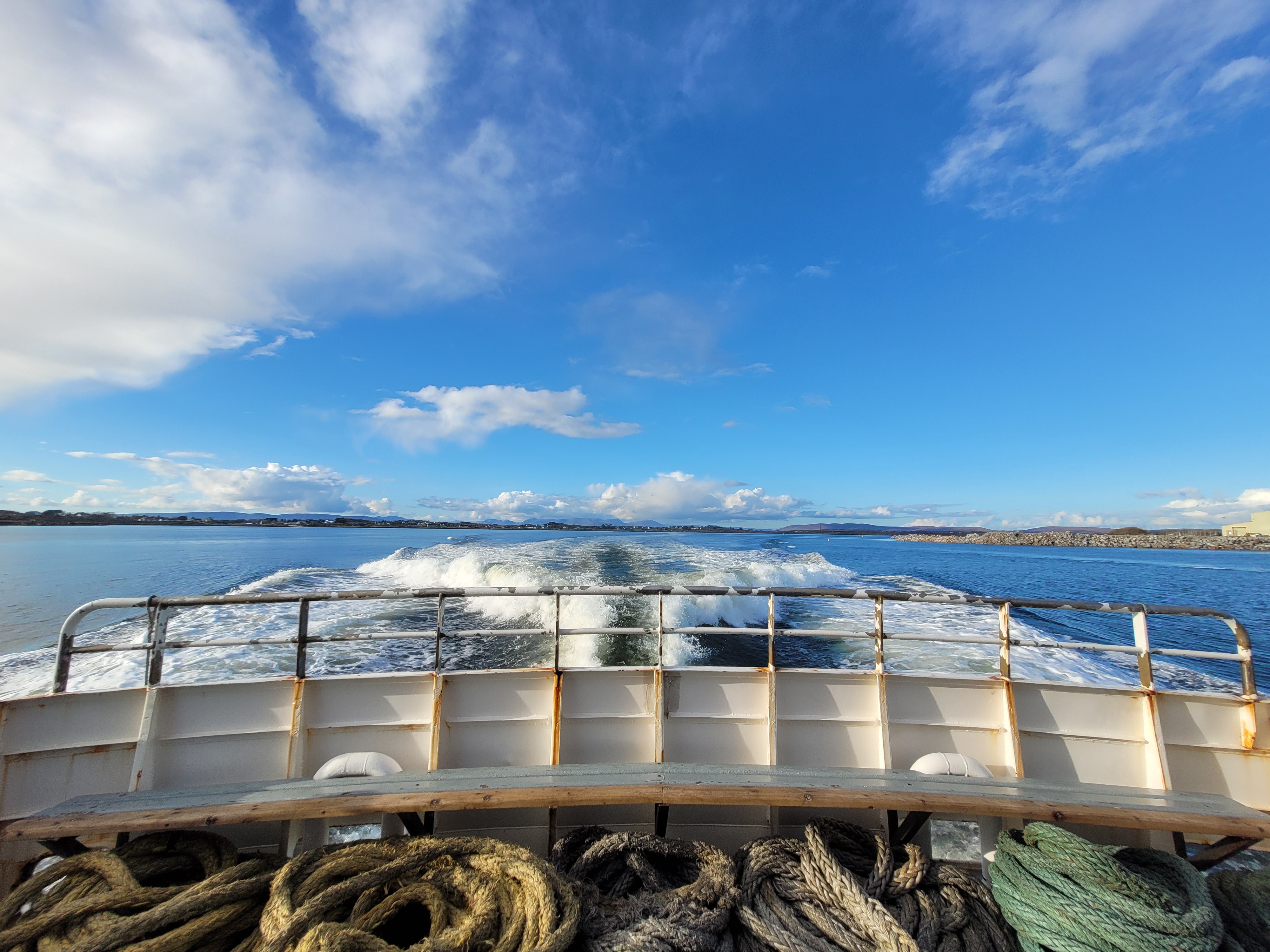
Recently, I was sitting out the back of the boat on the way into Ros a’Mhíl, of a Saturday morning, on one of those mornings where the sea was so blue you could paint the sky with it[1]. I had my face turned eastward to the sun and without device or distraction, I was – in the words of Mary Oliver – ‘idle and blessed’. I often am idle and blessed on the boat, even on winter nights ploughing through interminable darkness.
It’s a good thing too that I’m fond of the boat, for the sea dictates life here but the boat dictates decisions. Her movements shape the island day, sure as Angelus bells. She is our lifeline, literally. But more than that again, to me, for it is from the boat that I most appreciate the improbability of the life I get to live here.
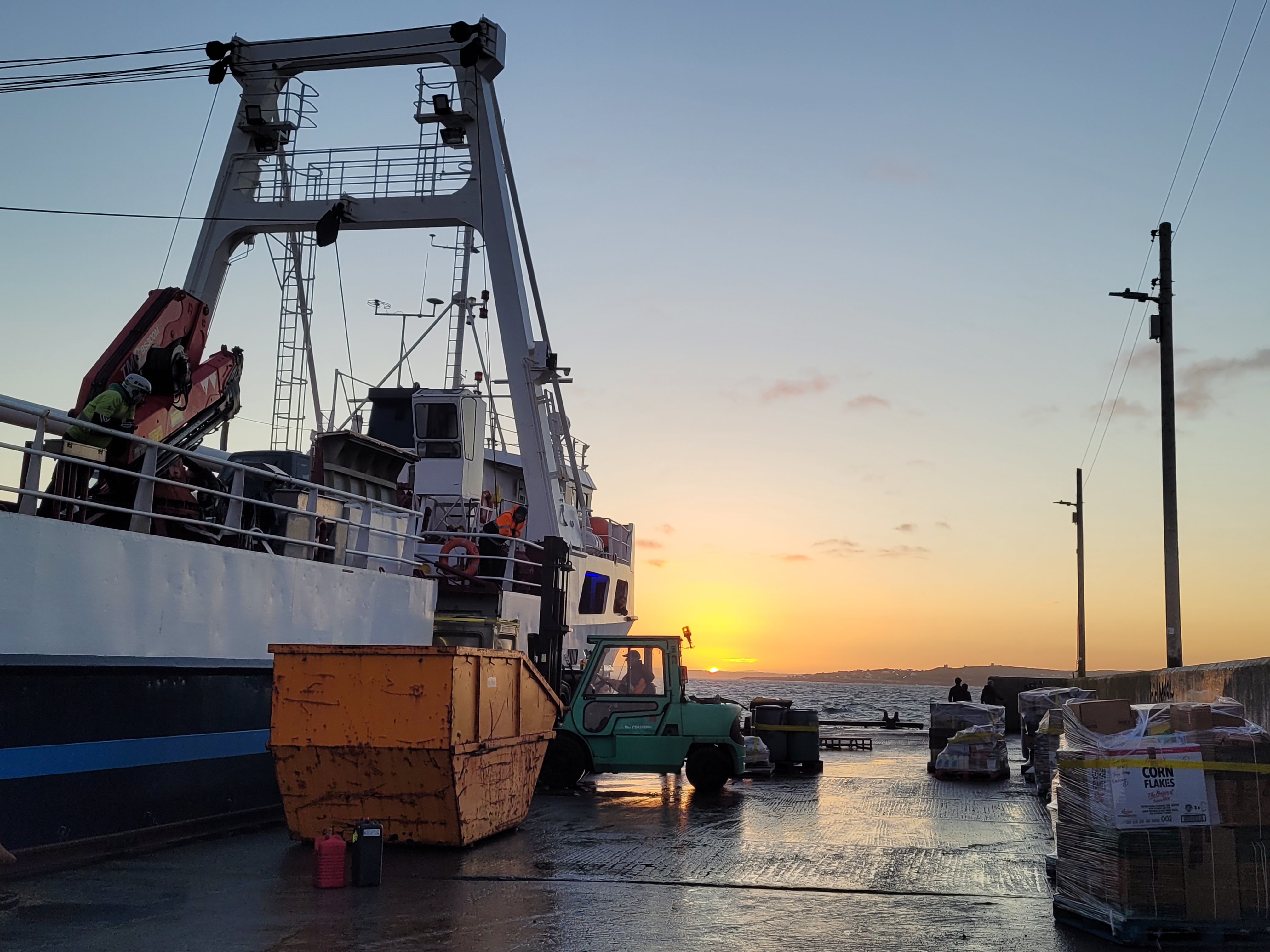

Now, I say ‘the boat’ but there are two boats; the passenger ferry from Ros a’Mhíl and the cargo boat, Saoirse na Mara, that sails from the docks in Galway. The cargo boat deserves a post onto herself, but written by another, for rarely am I at the pier when she’s in. Suffice to say, if island living could be captured in a single shot, that shot would be the slip in early morning light, cars lined up with scooters and a tractor or two, Inis Oírr in the background and behind that again the blaze of a rising sun. And all eyes to the forklift and the long arm of the Saoirse na Mara crane as unloading begins of cars, vans, SuperValu shopping, gates, Guinness, stock for the shop, timber, calves and coal – amongst much, much else.
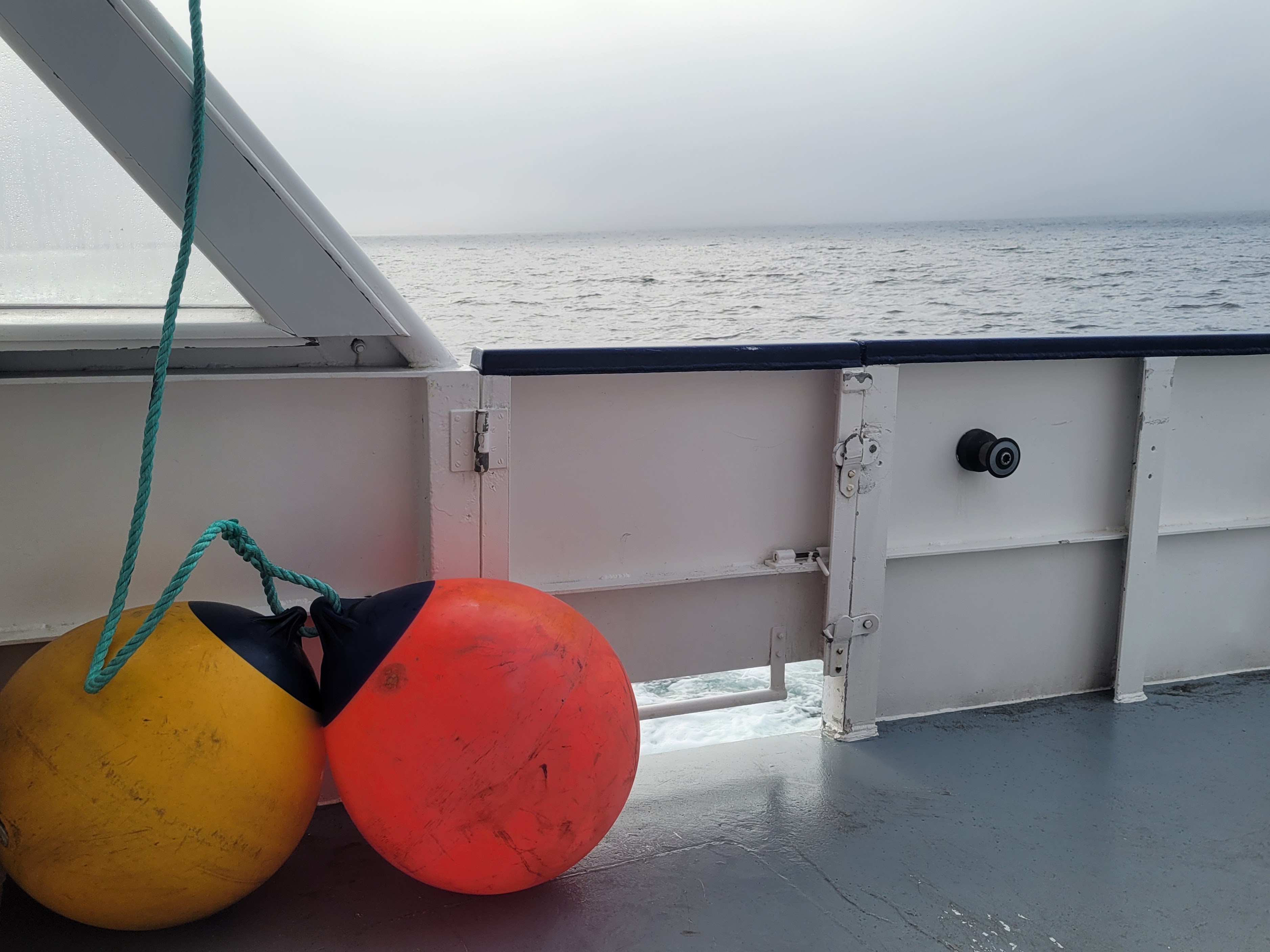
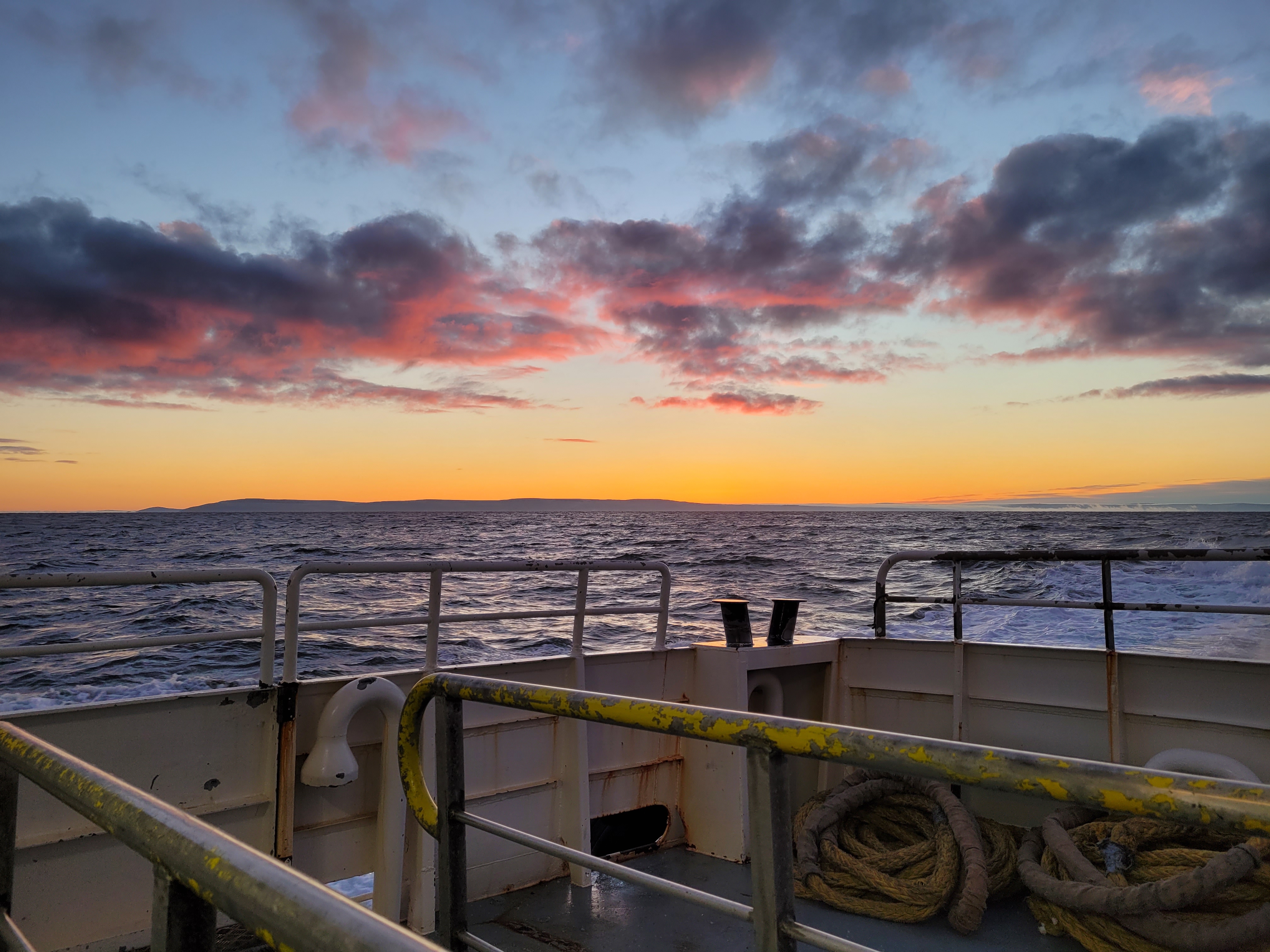
We do have a plane, but the vast majority of the island’s coming and going is aboard the Aran Ferries-operated Banríon na Farraige, shared between Inis Meáin and Inis Oírr. She sails out to Ros a’Mhíl twice a day, at 0815 and 1645, and she comes back again at 1030 and 1800. The rumble of her vibrations can be heard and felt up through the island, a most unwieldy but reliable timepiece. The Banríon is older than the rest of the Aran Ferries fleet and she’s not as sleek or shiny as the others, but I like her; she has character, she wears her wear well. I sit out the back of her, idle and blessed, sometimes chatting to whoever I might meet, but more often in silent awe of all about me; cinemas of sea and sky.
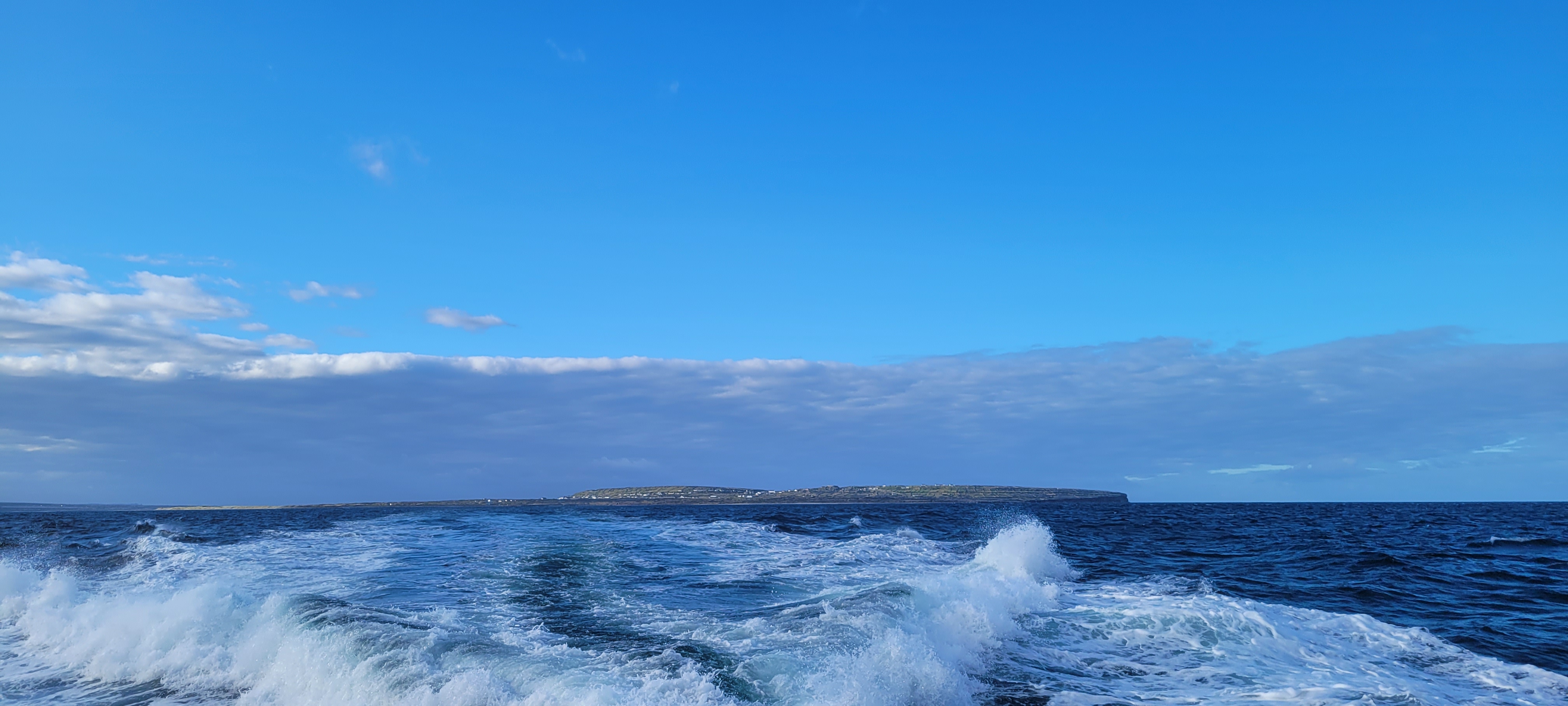
I am generally a restless person; slow to settle and rich in distraction. But I find a peace on the boat, a suaimhneas, rarely found elsewhere. It’s the landscape, of course it is the landscape. But it’s the lulling effect too of the engine’s thrum, the sea air, the fifty-odd minutes of imposed down-time. It’s the brilliant whiteness of the waves behind, and the whole of this island come in to view, it’s the evening light and the spell the sea casts upon our silly little souls. Whatever it is, there I do be, lost in thought, idle thought, unspecific or unspecifiable, divining the sea for inspiration, occasionally with success.
The boat is a liminal space of neither here nor there, and I think that’s where the suaimhneas comes from. On the neither-land of the boat, I’m not worried about how long is too long or not long enough on Inis Meáin, or whether I should be elsewhere and where elsewhere is. On the boat, there’s no whos, whats, whens and whys. On the boat everything is grand, even all we cannot see.
From the boat, the unlikelihood of living on an offshore island is laid bare. As I gaze out at the whole of the island, from seanchéibh to cliffs, then behind me at all the people I know inside, and somewhere, yonder beyond the mainland and whatever plans I have made, I appreciate most vividly that this is a life few people get to live, that a life in this place is – to a point – a life less ordinary.
If for no other reason than it takes a boat to get to it.
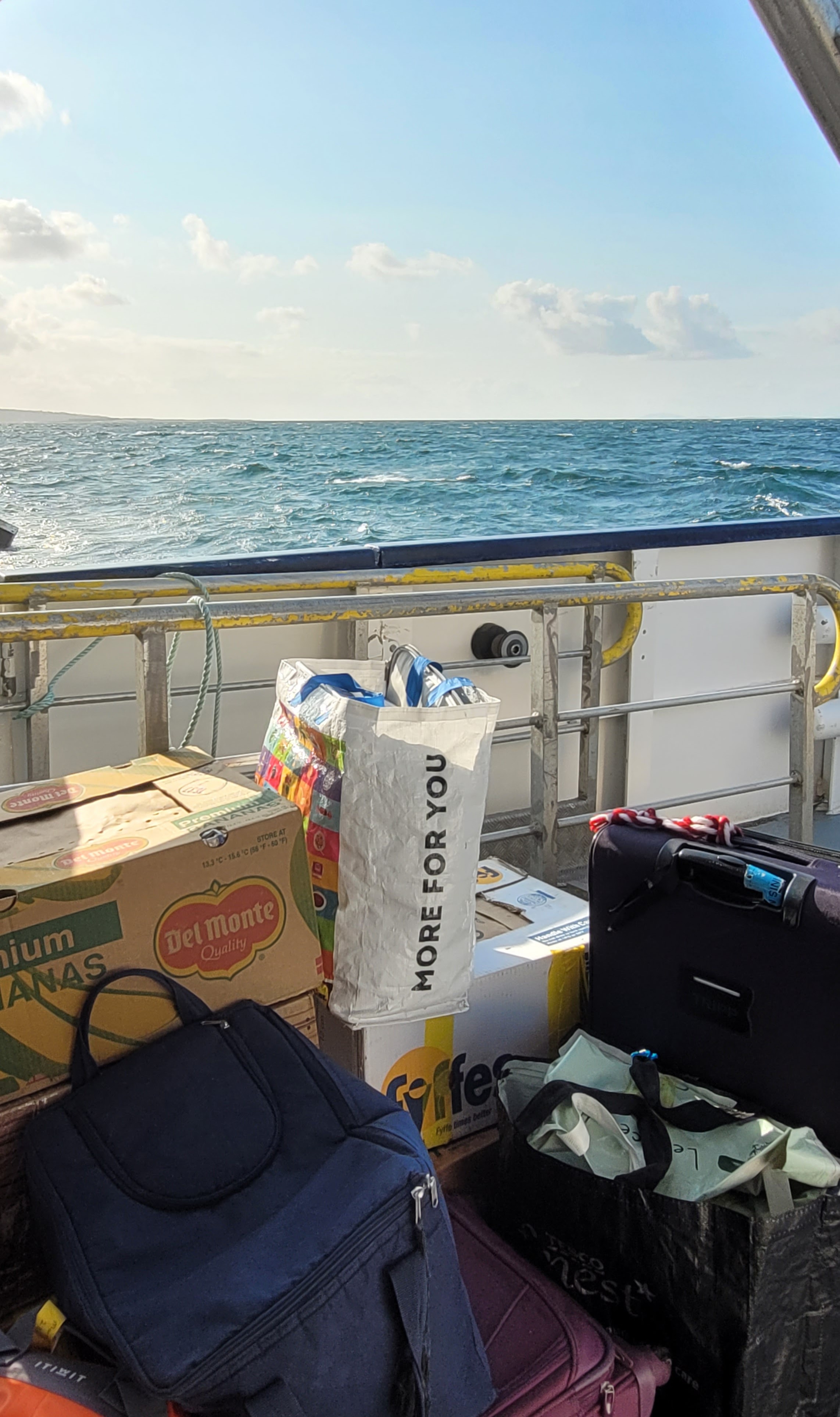
An article in the Irish Times on post-pandemic island-living used the word ‘community’ thirty times, and I get that, for the sense of community I feel here is a huge reason I keep staying. On a daily basis, it’s in and around the boat that community here is most apparent.
The boat is a wee community; the hardly-shocking result of regularly throwing people together for fifty odd minutes, with nowhere to duck out to. Though of course many people seize the chance to nap, the boat is never silent; you wouldn’t know who you’d meet, the chat is easy, the rhythm of the engine calms all, and it’s easy enough stare out to sea if conversation runs dry.
Community at either end too. At the pier this side; people dropping, people going, people arriving, people welcoming. The bluntness of ‘and where are you going?’ or ‘well, what were you at?’ Unspoken solidarity in the neighbourly gestures of keeping an eye on shopping while a car gets parked, in the chain made to pass up boxes and luggage, in lifts up from the boat and WhatsApp messages about whose Aldi bags ended up where. Or even when the gangway is pulled up, and we away to sea – we, this tiny commonwealth, bound by the unlikely circumstance of Inis Meáin.
‘Tell me’, Mary Oliver asks in her Summer Day, ‘what is it you plan to do with your one wild and precious life?’ Well I don’t know Mary, of course I don’t know, I’ve never known, but fret and wonder as I might – and as I do – time spent here is time well spent. And the boat is the symbol of that time, of those decisions, of this wild and precious life on Inis Meáin.
I live in a place accessible almost only by boat.
And that has made all the difference.
Thanks for reading, and I hope you enjoyed it. This is my eightieth post, the other seventy-nine or so can be found here!
[1] God I wish I’d come up with that line myself. Alas, I didn’t. It’s from Postcards by Bert Meyers, which is here. The Mary Oliver poem, Summer Day, can be found here. And there’s a wee hint of Frost in there too, and his The Road Not Taken is here. And ‘unspecifiable’ is not a word.

 doireann.ie
he..heee…unspecifiable
LikeLike