
I’ve the ears bent off anyone who will listen about how great it is that Brigid’s Day is being marked with a public holiday. For me, the day’s significance lies in it being the first day of spring, but the government’s intention is that it be a celebration of women and their vital role in building, sustaining and inspiring the nation. So I’m double-jobbing today; I am celebrating the living daylights out of women, but my heart is cheering spring’s imminent arrival, and the hope and reawakening that comes with teacht an earraigh.
My soul is nurtured by the idea of spring; by notion of the coming light and bright, by thoughts of buds’ blossom and bloom’s beginnings, by the prospects of opportunities anew. But in places like Inis Meáin, where seasons are as much felt as they are seen, seasonal change is far more than a mere notion or ideal.
Before the arrival of Christianity to Ireland, what we know as the first and second of February marked the halfway point between winter solstice (the year’s shortest day) and the spring equinox (when day and night are equal, or when we change the clocks). That festival was Imbolc and it marked the beginning of the agricultural year. An older version of the name ‘Imbolc’ is ‘imbolg’ which could be translated as ‘in the belly’ – giving rise to a metaphor describing this period as ‘winter pregnant with summer’[1]. As Christianity spread throughout Ireland, these days became St. Brigid’s Day and Candlemas Day – both being literal and figurative celebrations of light.
The new public holiday in honour of St. Brigid has something for everyone to celebrate. Conservative or liberal, religious or atheistic, green or no, man or woman, craftsman or wordsmith, all can gather under Brigid’s flag. She is said to be the patron saint of babies, children whose parents are not married, blacksmiths, boatmen, cattle farmers, dairy workers, mariners, midwives, nuns, poets, the poor, poultry farmers, printing presses, sailors, scholars and travellers to name just a few.
Whatever fence you sit on or don’t, the day marks the symbolic ending of winter’s darkness, the promise of light; of brighter evenings, sunshine, growth, birth. Of hope. It is, after all, hope that distinguishes January 31st from February 1st; not weather, wind or temperature.
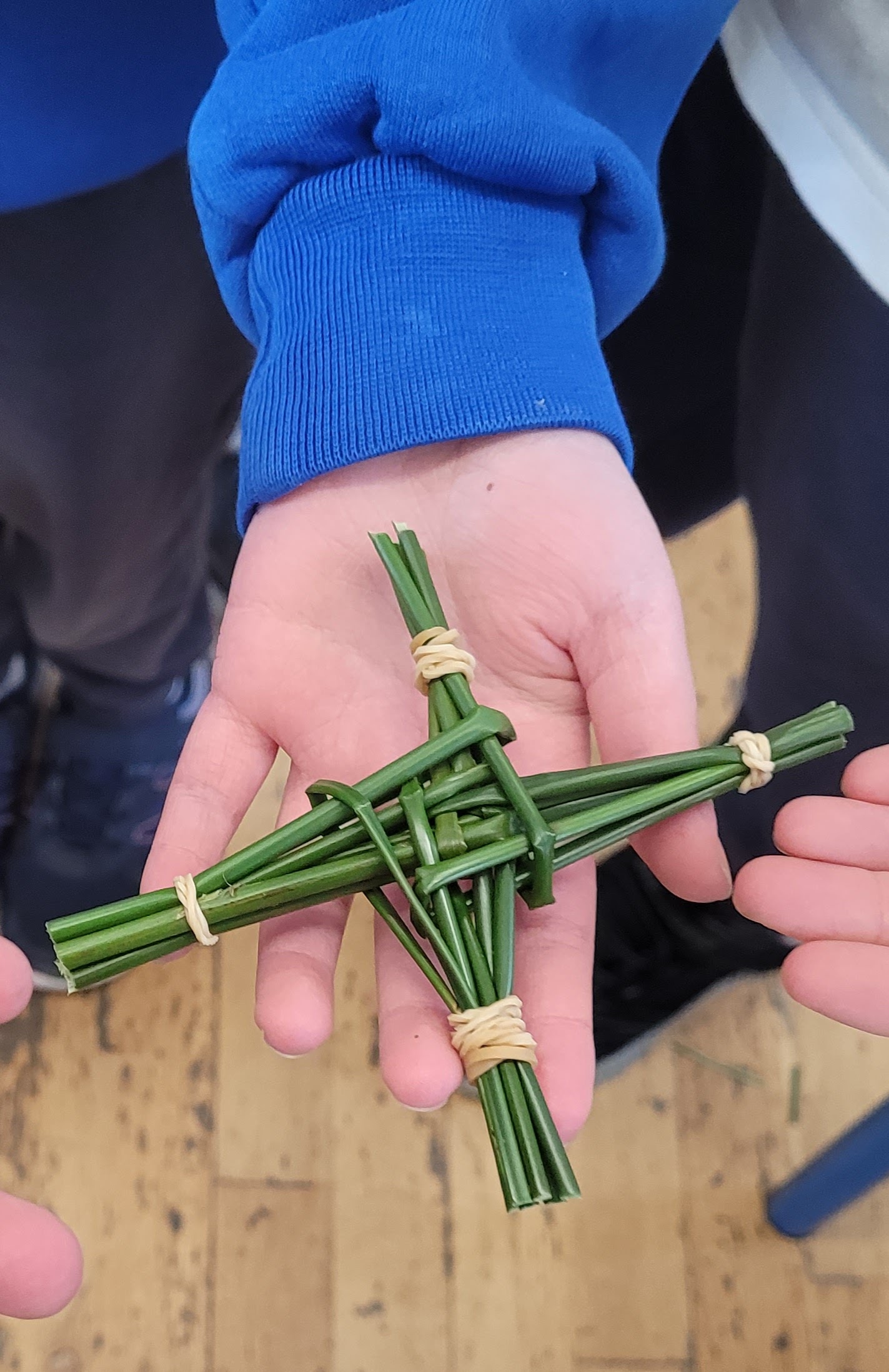
At home, when I was young, St. Brigid’s Day was of more importance than Patrick’s Day; the latter a day that mattered to other people, a day for Americans or townies with parades to go to. St. Brigid’s Day reflected our own lives; rushes were easy come by in west Roscommon, Brigid was a woman who was headstrong rather than immaculate, she was protector of animals and we were the children or grandchildren of farmers. In school, the best thing about being in fifth or sixth class – besides the teacher, of course – was getting to spend Brigid’s Day making crosses. There’d be the earthy smell of clippings of rushes all over the floor, groans of frustration and bickering over elastic bands, growing piles of crosses on tables. And very unBrigid-like envy at the handy ones who had progressed on to the fancy interlaced crosses by small break. The crosses would be blessed, either at Mass or when the priest would come out. But, as I remember it, the blessing of the crosses was kind of an afterthought; their blessing was in their making, Brigid would do the rest.
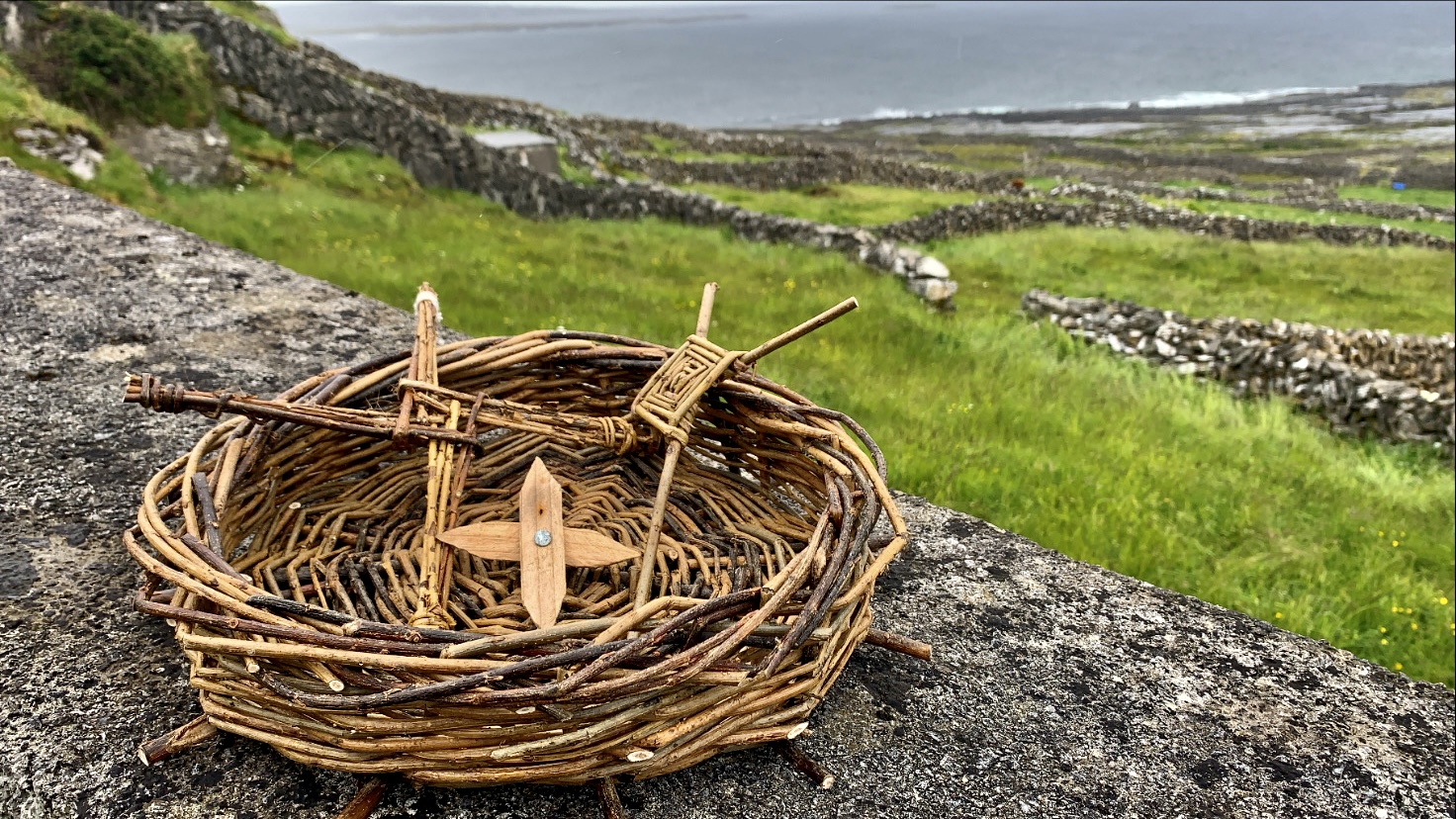
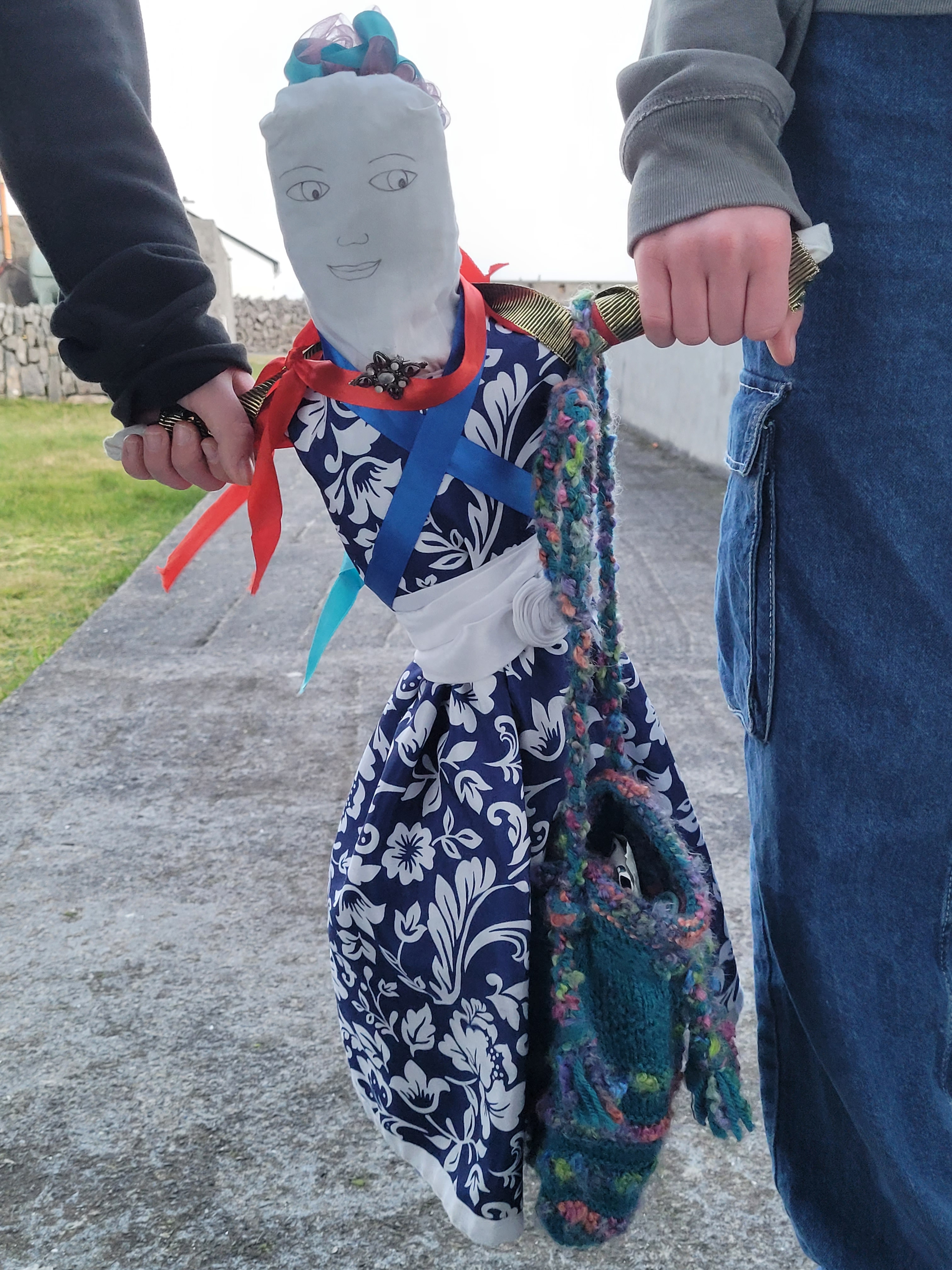
Lá Fhéile Bríde is a most special day on Inis Meáin, and across the three islands, with traditions alive today that date back to ancient times. Crosses are made here too, though not always of rushes; sometimes of straw, or wooden cipíní. Faochain, or periwinkles, were gathered and eaten to signify the renewal of the fishing season. The brídeoga survive here on Inis Meáin; on January 31 girls go in pairs from house to house with a brídeog – a doll made of straw, decorated with brooches and ribbons – bringing a blessing to each house they call at.
I’m writing this on the 31 January, and the excitement and anticipation is lovely. At a time when such traditions are dying out elsewhere, the girls can’t wait to get on the road, adults stay near the house so they don’t miss the brídeoga, passers-by are asked if they’ve seen sign of them, and women of all ages reminisce on their own brídeog days.

In an age of science and reason, these practices can easily be debunked and ridiculed. But we shouldn’t forget that for centuries these rituals helped many understand or reason with the world around them. Since coming to Inis Meáin and taking note of such natural cycles, of seasonal change, especially in spring, the world around me has come to make a bit more sense
I see every year as a wheel or a spiral, and we accommodate ourselves to its turning. In winter we bedded down; we read books, did courses, left the island less. When spring comes, windows and doors will be pitched open, houses cleaned out, a skip or two ordered, runners laced up, bright colours worn, flowers planted, eyes will widen again in anticipation. And with that light will come more activity, more sprightliness. Visitors will begin to return, and evenings will be longer. In a few weeks, I’ll be watching sunsets from atop Dún Chonchúir again. Later, cattle will be moved to the front of the island, and the Doolin boats will start again. We’ll count the months in jumpers shed.
And all the great ideas! All those plans! In winter we slept, in spring we awaken.
Resolutions shouldn’t begin in deepest, darkest January, but in February. February is a far better time to go and chase a new habit or intention, and bring to it spring’s energy. The landscape will cheer you on; daffodils will poke up their heads in support, billowing clotheslines will flap in applause at your efforts, the stronger sun will sustain you.
I’m assuming that someone in the Dept. of Whatever drew a line between the light of St. Brigid’s Day and the emergence from the long winter of COVID last year, and that went a long way in Brigid’s Day getting the bank holiday nod. But whatever the reason, I’m delighted we’re marking this day nationally, delighted that maybe – just maybe – we might connect a little more with the natural cycle and the boundless energy of the world around us.
Sure, isn’t it worse we could be at.
Thanks for reading. If you enjoyed this, other posts can be found here – they’re mostly about Inis Meáin these days, but there’s stuff there about politics, home, rural living and other notions I took on given days. I’m on Twitter too, if you really like what you read!!

 doireann.ie
’tis
LikeLike
I love this. Thank you and happy Imbolc to you!
LikeLike
Hi Doireann, I’ve never been on Inis Meáin for the Brídógs. Here in Donegal the cross making has been a tradition for as long as I can remember. St Brigit’s Day is celebrated more now around the country. It’s great that a female is being celebrated whether as a saint or goddess. I’ve always celebrated this day as it’s my birthday and the beginning of Spring.
Keep well Doireann and keep writing.
LikeLike