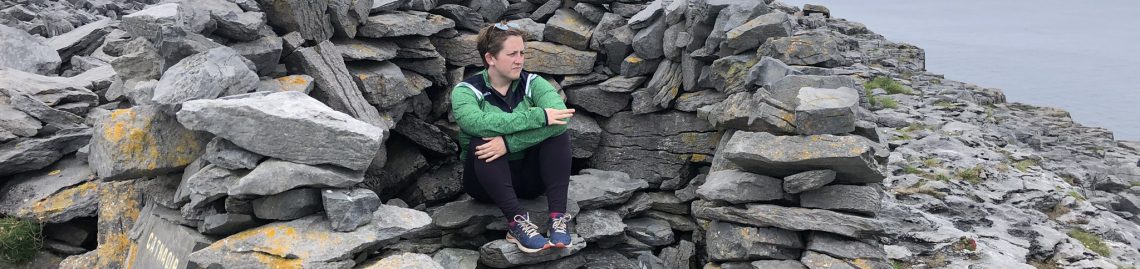
Over Easter, I loaded up the bike and a bag of shopping and hit for Tory Island – Ireland’s most remote offshore island. Tory is so remote that getting to the boat is a trek; Magheraroarty is ninety minutes beyond Letterkenny, through the Derryveagh mountain range and landscape as sweeping as it is harsh. The boat out takes approx. fifty minutes.
Tory is at once dramatic and dreary, beguiling and bleak. Like the bog of a still summer’s evening, there is the feeling on Tory of being in the presence of unnameable significance. The island has the mystery of the moors, and the intrigue of the apart. To every island there is a wildness, but to Tory there is a rareness.
I loved every bit of it.
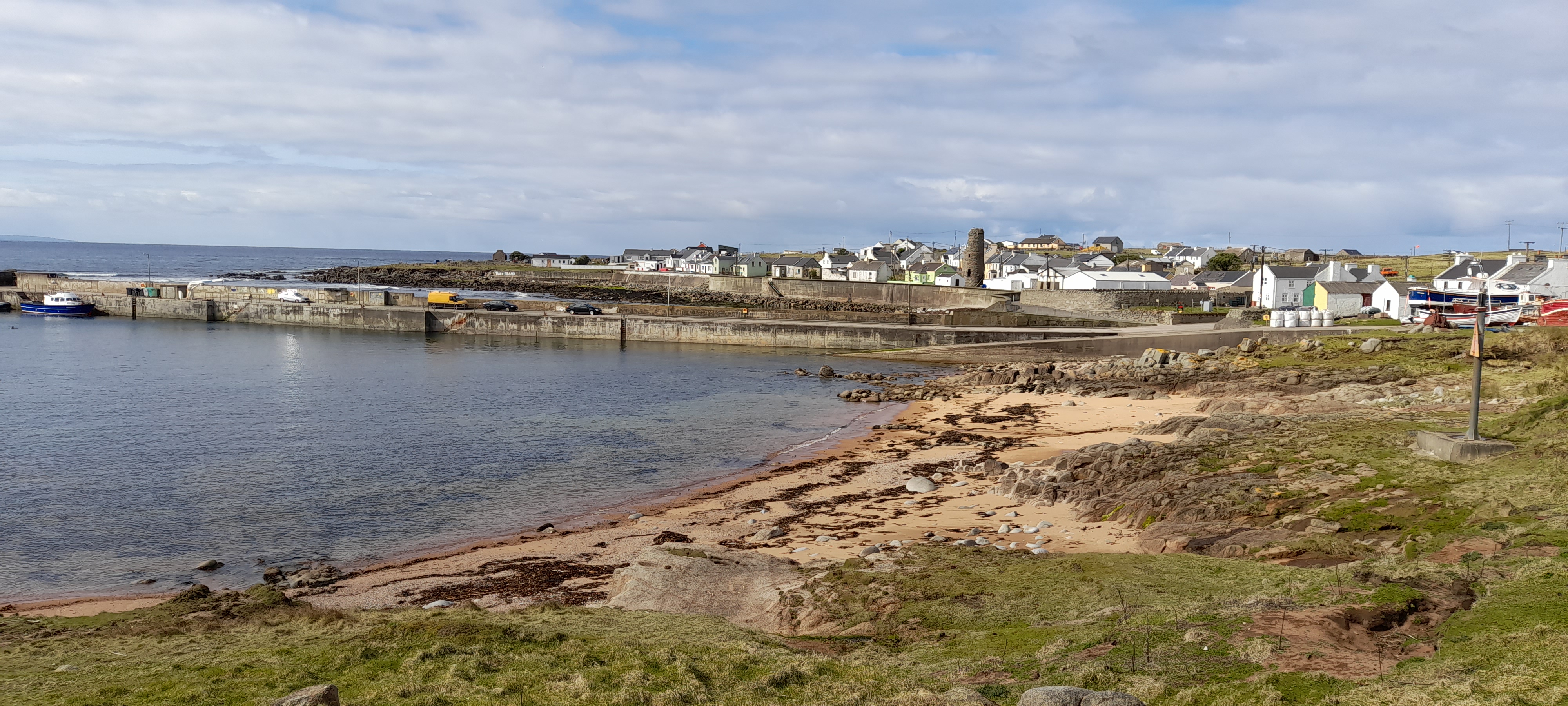
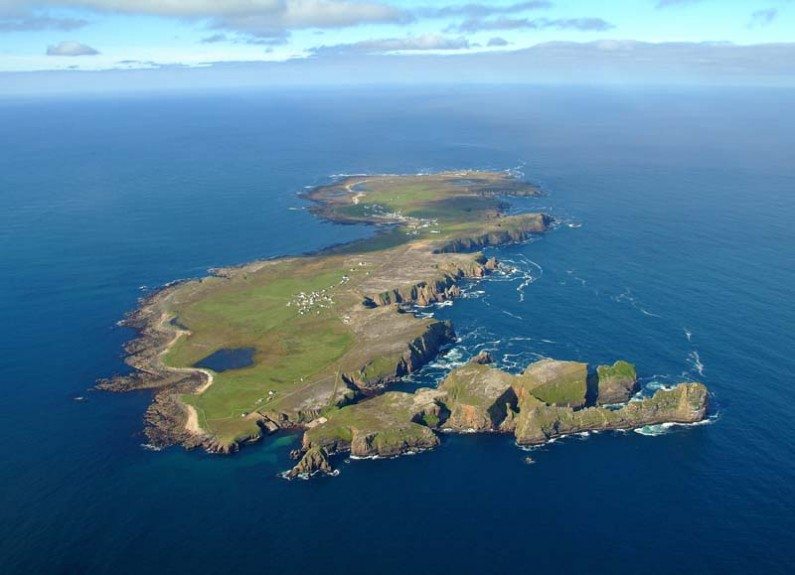
Tory is a Gaeltacht island 14.5km off the Donegal coast, rising up from the sea like a giant fortress. The island’s activity largely centres around the pier, near which is a church, shop/post office, hotel, pub, primary school and Ireland’s smallest secondary school. There are two villages, and in 2016 the island had a population of 119 people.
The island is around 5 kilometres long and a kilometre wide, the island’s road linking the lighthouse at the western end to the island’s spectacular cliffs edges at the eastern end. The land looks much like commonage at home – it’s neither bog nor grass, loosely fenced if at all, land where runners would be sufficient but ruined.
‘Isolated’ is the word most heard when speaking of Tory, and with good reason; its nearest neighbour, Inis Bó Finne, is largely left to the birds outside of summer. Such isolation cannot but impress itself on a population. The islanders I spoke to were very nice to me, speaking sometimes in Irish to me but generally preferring English to the deciphering of my Connemara Irish. I understood their Irish when spoken to, but when they spoke among themselves I hadn’t a notion and contented myself with the dialect’s singsong cadence.
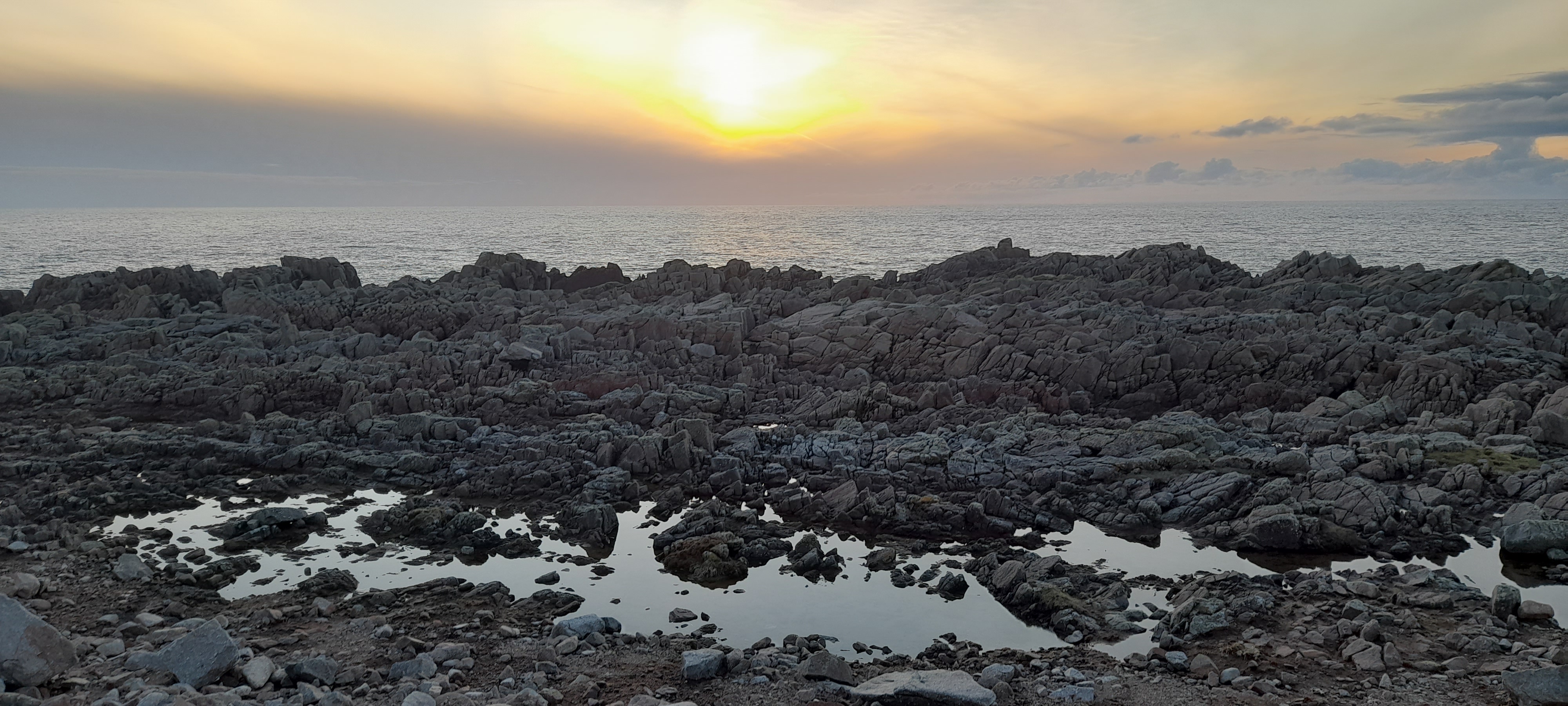
The mainland shelters the island’s southern face from the ravages of the Atlantic, and waves crash onto long, rocky beaches. The rock of Tory is granite; at the lighthouse end the rock is greyer brown and eroded to jaggedness but below on the shore, the rock is smooth from tide. Peering over one day, I saw seal pups, silver fur still theirs, barking among themselves as they slid off rocks into the water, and the sport of it filled my heart.
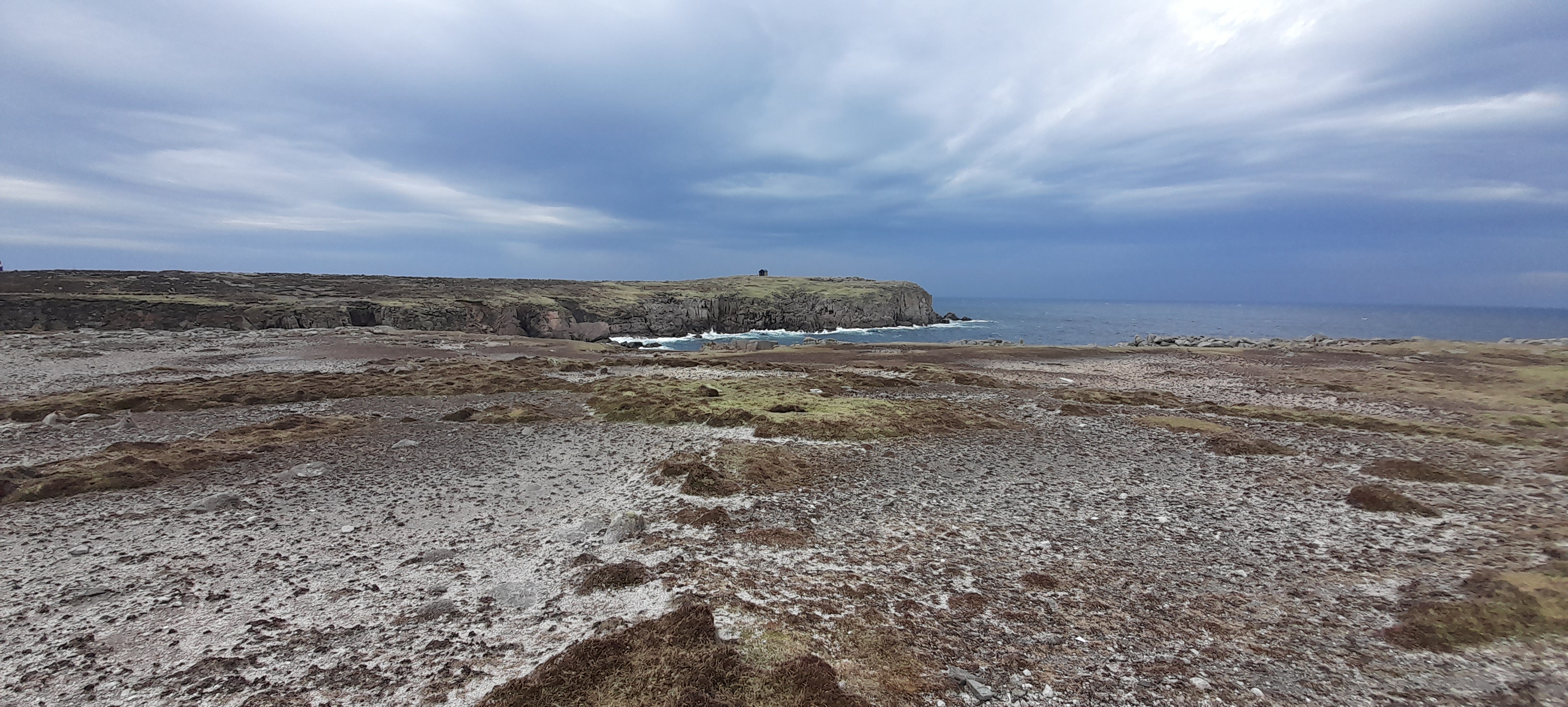
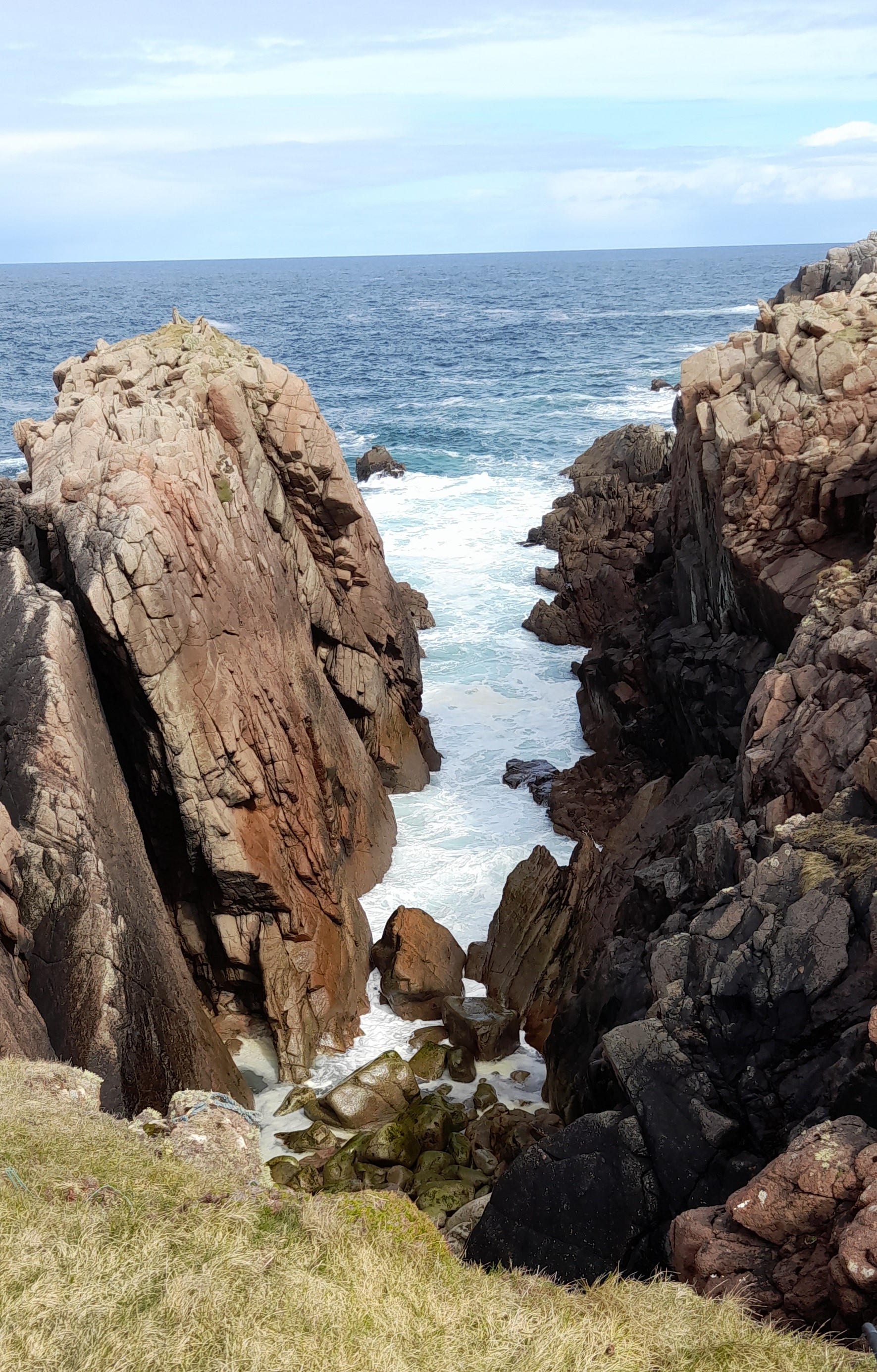
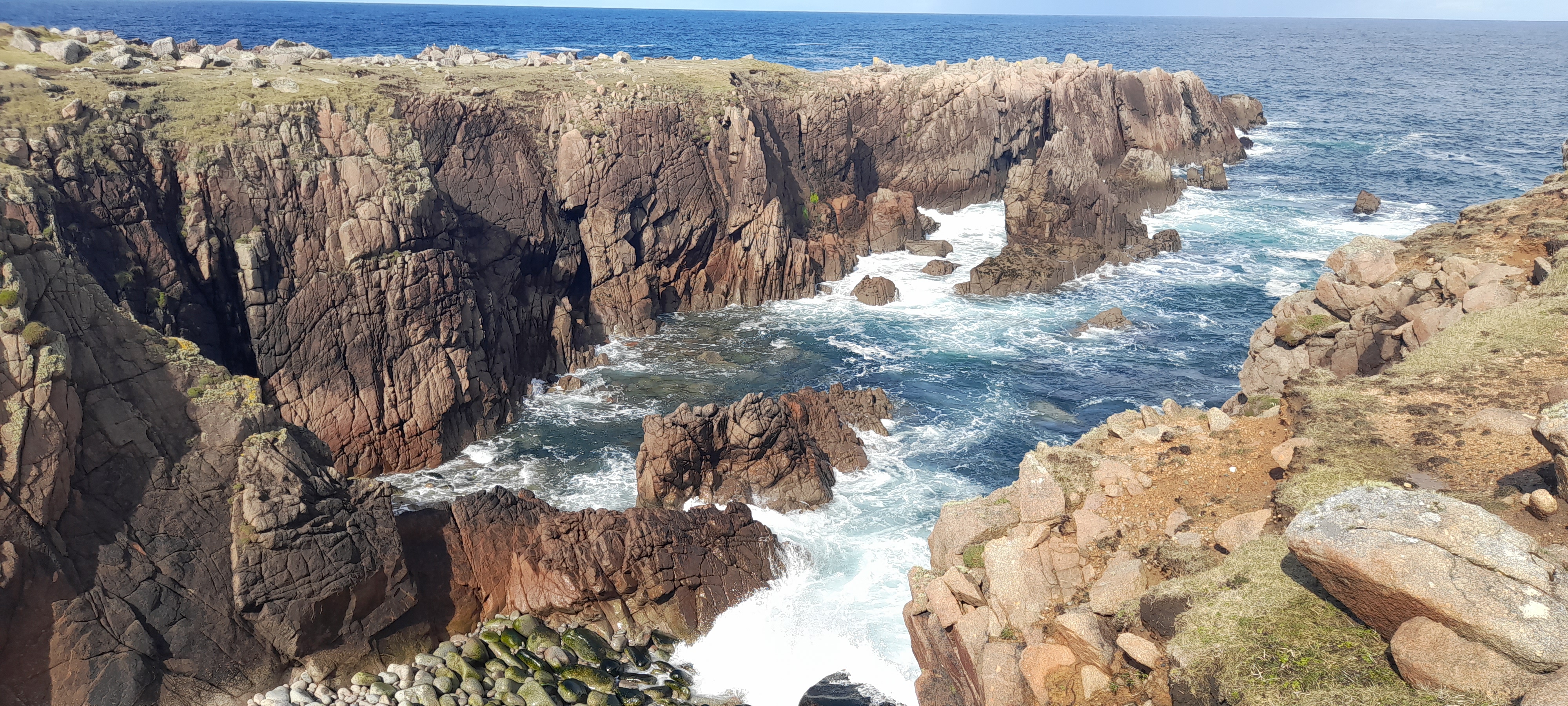
On the island’s northern face the rock is colossal and imposing, with lines of erosion running deep across the smooth slabs, like lines on a weathered face. That rock sweeps down to the sea; brown and tan granite meeting coral waters and brilliant white foam. It is unruly coastline; sea stacks have broken off and stand defiantly, colossal ridges jut out like claws and at the foot of sheer cliff drops lie tiny inlets, the white stone dragged in by tide shimmering in the sun.
But Tory has a bleakness to it too. There is scarcely a square foot of lush green grass to be found. Plains of marshy, boggy land, brown and black land prevail, and what grass there is has yellowed in the wind. In times gone by, cattle and sheep were kept, but today rabbits reign supreme. That said, beauty is in the eye of the beholder, and if that particular landscape isn’t conventionally beautiful, its wildness is certainly captivating.
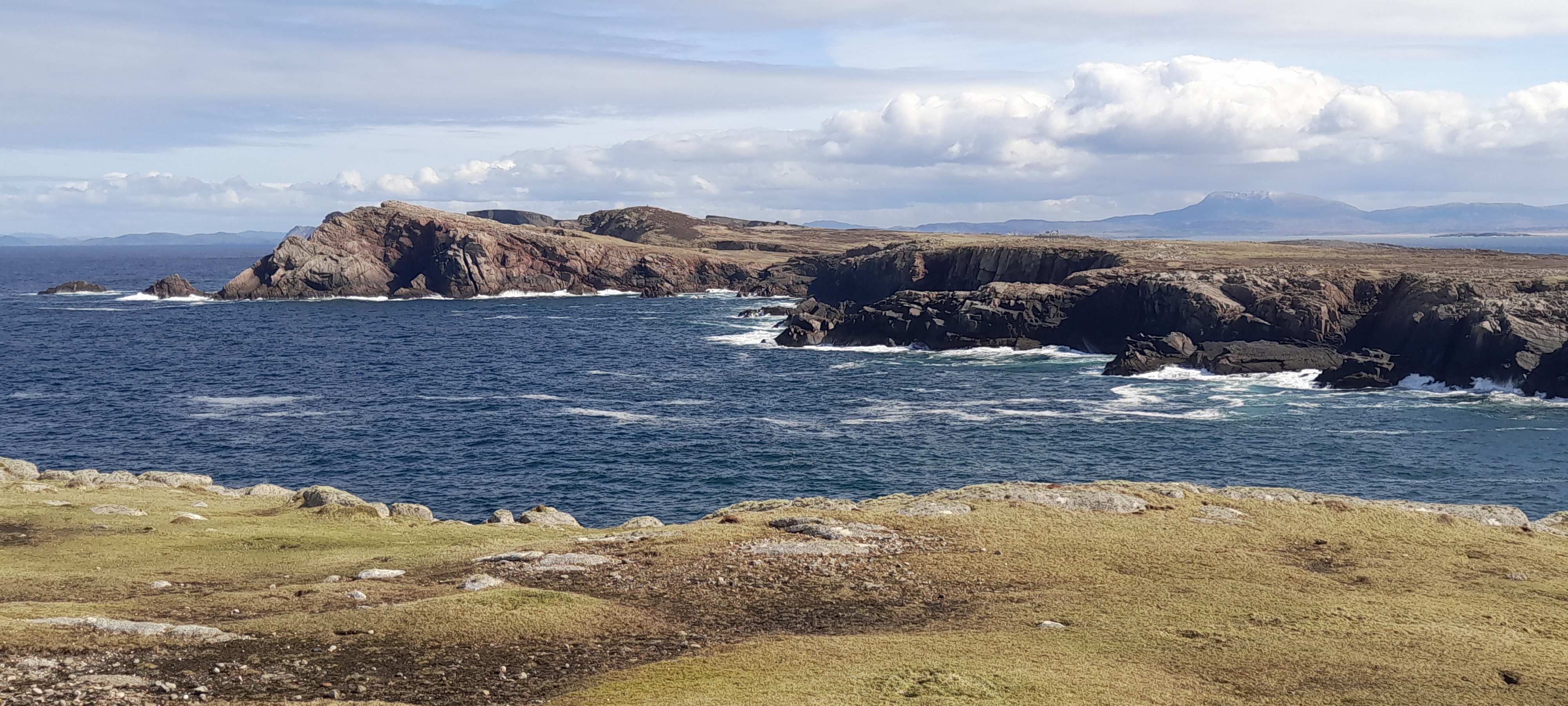
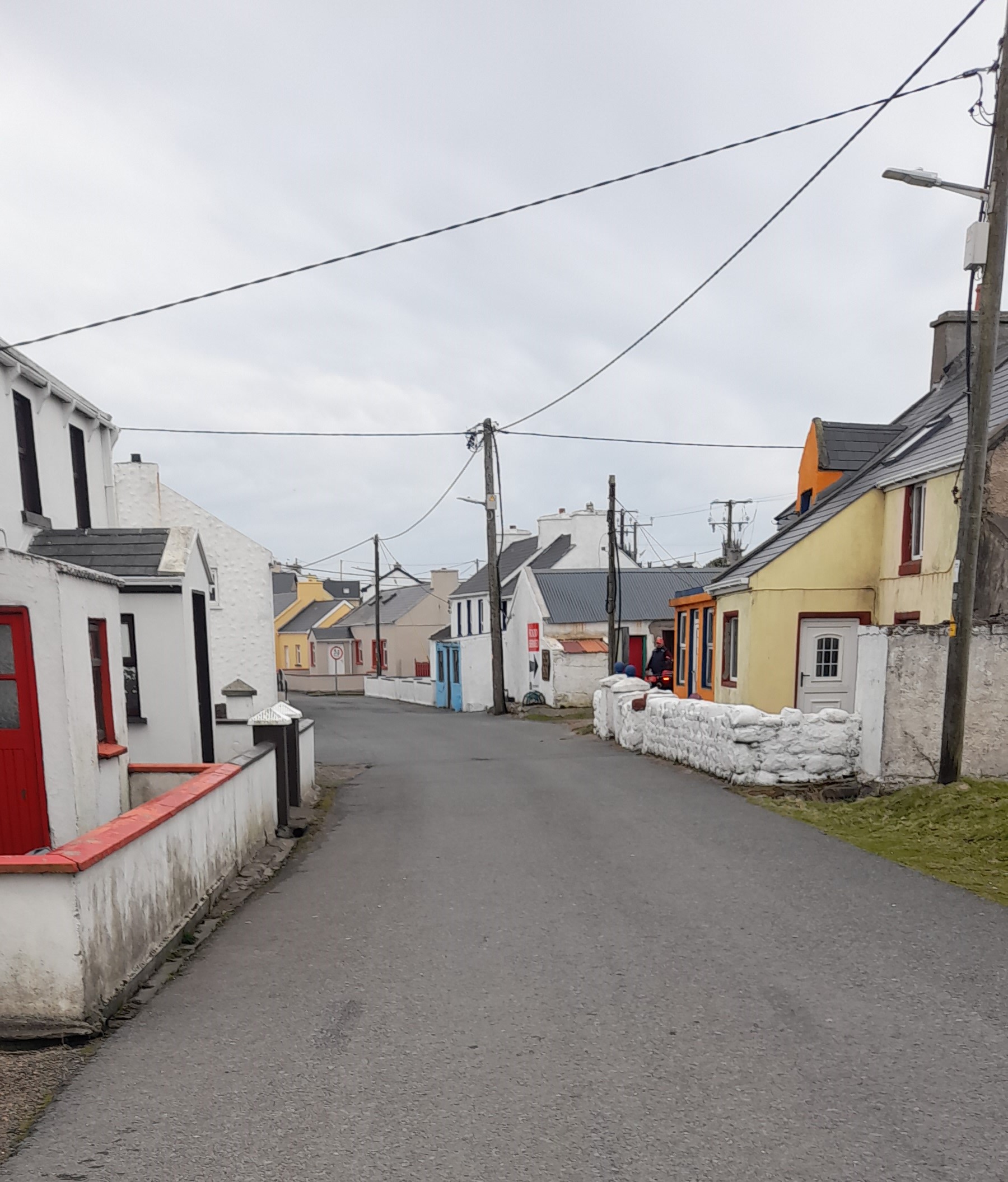
Three days were spent wandering and cycling, languidly enough to observe but not to gawp. Tory has a particular style of housing and along the street, the cottages of different colours had plaques over the doors with a family name and their date of construction (most being 1904 and 1905 – a reminder that for all the Brits’ faults, they did make a serious effort with the islands at one point).
Between the pier and my Air BnB lies the old graveyard, behind walls taller than myself. Modern headstones stood neat as you like, most written in Irish. Old headstones, cut and inscribed by hand caught my eye for their simplicity and use of English, hints I suppose of the languages’ complicated relationship.
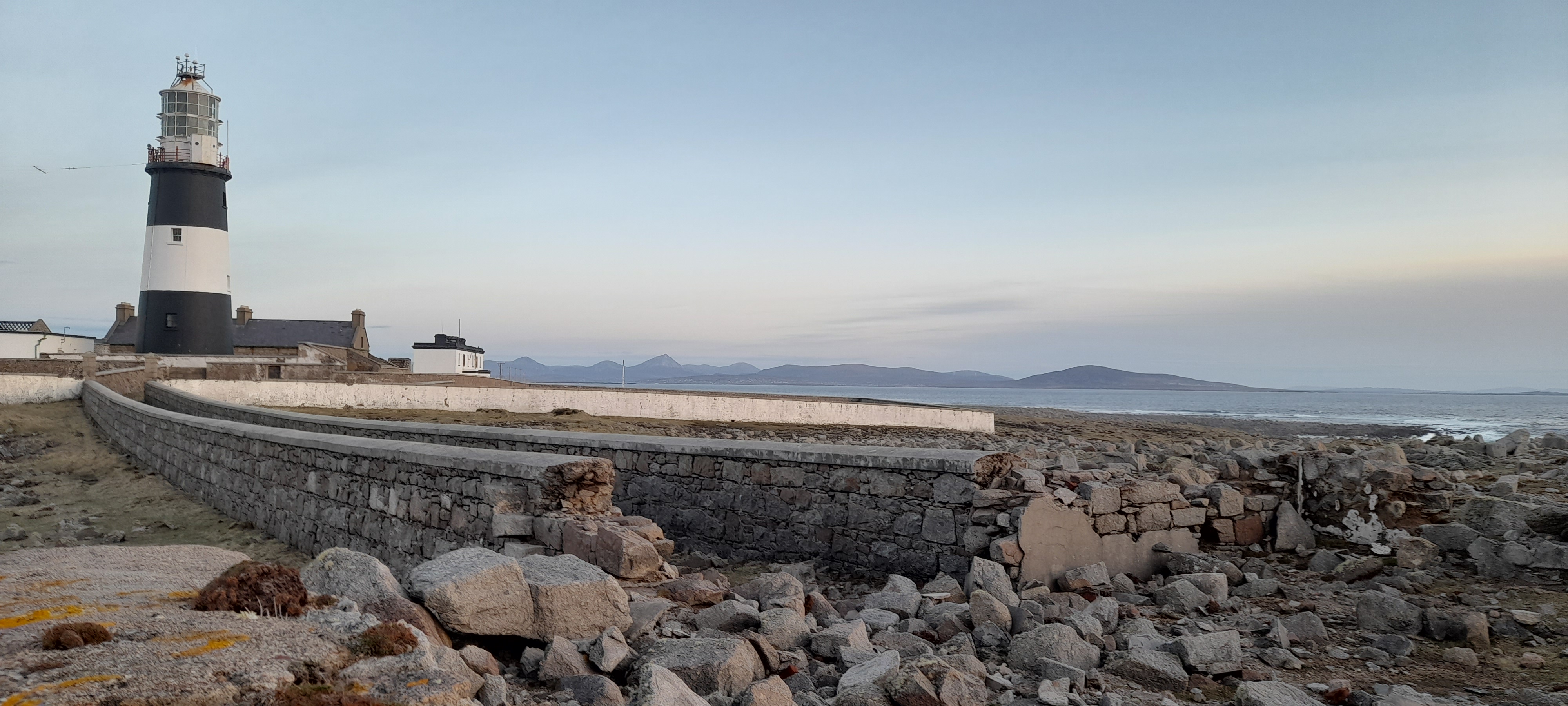
My bike basically cycled itself to the lighthouse. The black and white beacon, and the cottages in the grounds, are surrounded by high Victorian institution walls built to withstand ocean ravage and local defiance. Though lighthouse walls can nearly always be hopped, I find those spaces haunting and tend to admire from afar; imagining bygone days with cottage doors flung open, and lives lived in such splendid isolation.
Behind the lighthouse, I happened upon low boundary wall, inside which were two Commonwealth graves – the final resting places of British seamen or military washed up there. In one plot were buried several of the dead of HMS Wasp that sank in 1884 and in the other, a young man by the name of W. Fullerton, age 26, of the Royal Engineers who died in 1940, during WWII, and now he lies in perhaps the loneliest grave of these islands.
I easily covered the island on my first day, but enjoyed revisiting each spot, chasing new perspectives. I’d a whole afternoon on the east side of the island where there is a cluster of houses, and beyond that the wild cliff faces and acres of crag. Beyond that again is clear coral water, sea stacks and beyond that again, the Hebrides, the Faroes, Iceland. After a few photos I’d put the phone away and let my mind slow down and empty out, make room for the creative stuff. It is such emptying out that brings me to these remote spots.
I would go back to Tory again, with the laptop and refill pads because it’s a great place to work through ideas, to make something of notions in notepads. Tory isn’t conventionally beautiful or particularly charming and if it’s an island with nothing to do you seek, Inis Meáin is handier by far. And yet, for all of that, I’m already making plans to trek north again to Tory in the summer.
I love a good island so I do.

 doireann.ie
1 Comment