

Years ago, before I was born, a man in the village was rushed to hospital. His condition deteriorated and he died there. For years, his house remained exactly as he’d left it that morning; the spoon left in the bowl and the bag of sugar opened on the kitchen table, like props in a play. It fascinated me and I’d stop by the house regularly to look in the windows. Visiting evacuated or uninhabited islands is much like looking in that man’s window.
The Blaskets and the Inishkea Islands had been on a list for a while now (with Inishark, which I’ve yet to get to) and with little prospect of travelling abroad, 2021 was certainly the year to visit both.
The Blaskets are off the coast of Co. Kerry, the Great Blasket being the most visited, and the Inishkea Islands lie off the coast of Mayo. They are uninhabited islands; the Great Blasket was evacuated in 1953 and the evacuation of the Inishkea Islands was complete by 1934.


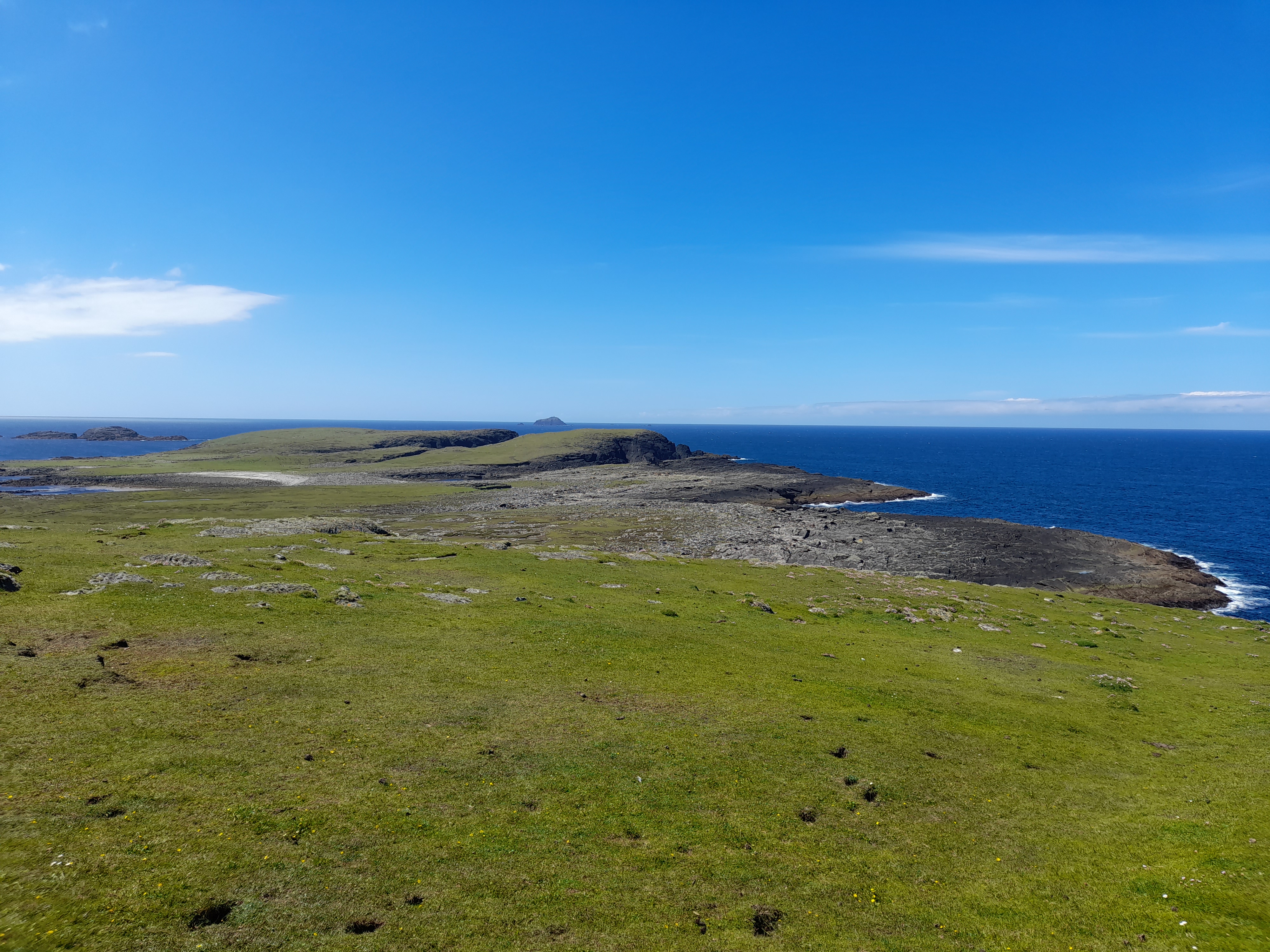

For good or for bad, you’ve likely heard of the Blasket Islands because of Peig Sayers and the abundance of Irish-language literature produced there[1]. On the other hand, you’ve likely never heard of the Inishkea Islands – the south Inishkea island or the north – which lie off the Mullet peninsula in Co. Mayo. The Inishkeas are likely one of Ireland’s least visited places.
The Great Blasket is OPW-run, and is a Mecca for tourists (particularly, the TG4-devotee gaeilgeoir type). All day, as we sat above on hills, we saw tour boats line up to pull into the tiny slip. It might have been the complete opposite on the usually serene south Inishkea Island, only the day we visited we were met at the pier by the chaotic bleating of hundreds of sheep gathered for shearing. Any other day there’d have been little sound, bar the song of birds, the lapping of water and the easy hum of a rib’s motor.
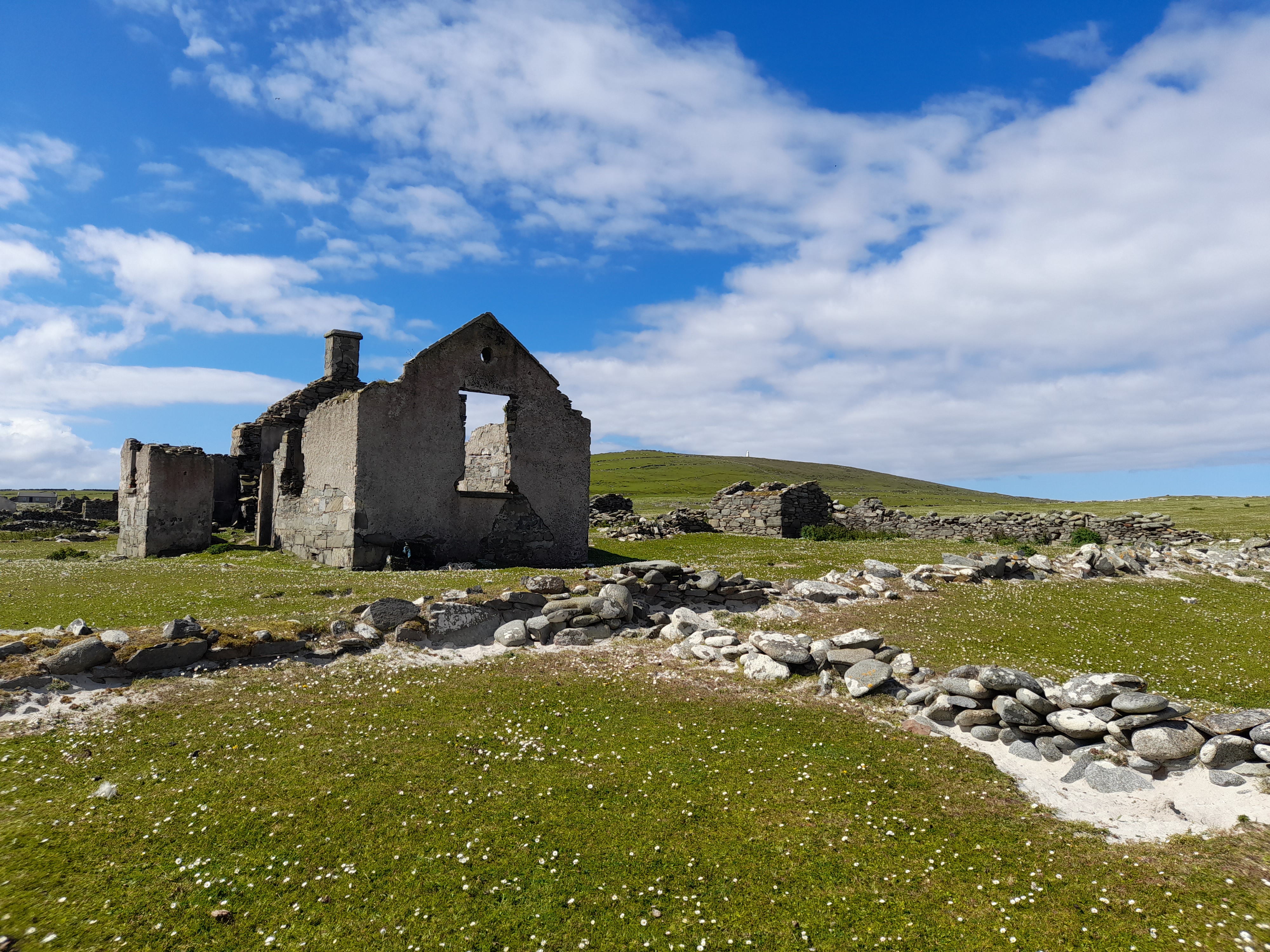
Both islands can be wandered around in a day, though the hills of the Great Blasket demand a degree of fitness from the wanderer. The settlements of each island are near their pier or slip and today the ruins of houses stand proud, like warriors who refuse defeat. They are, in the main, roofless and windowless and can be walked in around. Even the most unimaginative mind will find itself stumbling into notions about the lives lived in these spaces.
Tour guides provide context, a frame around which a general story is constructed, but their speeches are short because these islands are best experienced in the quiet of one’s own mind.


These islands sit off the most westerly points of Europe and are hardly handy to access, so why do visitors flock to the Blaskets and trek to the likes of the Inishkeas? Why did 40,000 people apply for the post of caretaker of the Great Blasket? What took Haughey out there?
Maybe it’s for the nose, or to keep the Instagram going. Or to find absolute peace in far-flung, serene places. Or maybe we as tourists enjoy backpacking through a past we’re cushioned from, to gawk at a past we’ll never have to endure. It’s possible we enjoy a good grumble about how hard a life Peig had or how awful de Valera’s Ireland was, before heading back to our hotels.
For me, it’s getting to lay a hand on the past, just as it was left. On both islands, one or two buildings have been renovated for overnight accommodation, but otherwise it’s all ruins. We can step inside the schoolhouse and look up to the sky. We can wander up the paths that islanders walked, imagine the freedom of a childhood there. We can walk around the houses, explore what’s left of significant buildings.
We have but a fraction of that history at home, artefacts of the lives our grandparents spoke so lovingly of. New houses, new roads, new schools were built on what stood in their time. But the south Inishkea Island and the Great Blasket Island stand largely as they did the day they were left, much like my neighbour’s house. We’re merely peering in windows.


The shorthand stories of evacuation usually revolve around a death, or a series of deaths, that robbed the islanders’ spirit. But such shorthand ignores a wider context of life without sanitation, adequate food and decent housing (all of which we tend to romanticise). Of island life being so hard that a woman marrying into an island needed no dowry. Of how boring it must have been at times for young people.
Devastating tragedies certainly hastened the demise of the likes of Inishark (TG4’s excellent documentary here) and the Inishkeas, but it was already well underway. The breakdown of the arranged marriage system was what decimated the Blaskets, as more and more women could choose emigration over the prospect of a life like Peig’s[2]. For the Inishkeas, the Cleggan disaster of 1927 (RTÉ’s documentary on it here) certainly demolished the islanders’ spirit, but the ultimate reason for their evacuation was declining yields on overused land (because there wasn’t enough quality land to rest it over seasons). Attributing island evacuations or demises to unforeseen tragedies washes everyone’s hands of long-term decline.
And if it was true back then, it’s likely true now. Perhaps in years to come, the decline of certain islands will be attributed to some out-of-the-blue occurrence rather than climate change, accessibility, substandard piers, cessation of services and other changes that made it too hard for young islanders to stay.
But I have digressed. I’ll go again to the Great Blasket and I’ll spend the whole day on it, if not the night, for there are few places as scenic and beguiling. I’ve visited the south Inishkea island, so next on the list is either the north Inishkea Island or staying a night in the renovated cottage on the south Inishkea Island. Places like these are truly special, giving us the chance to lay hands on a past we’ve only ever heard or read of.
That said, they have very real histories that we’d do well to learn from.



Put the kettle on and click on the homepage to browse nearly sixty other posts on subjects as diverse as swimming in the sea, US politics, the bog and places I’ve seen or been. You can also search by category at the top of the homepage. Or follow me on Twitter, I’m great craic.
[1] Leave poor Peig alone. She didn’t ask to be on your Leaving Cert, and I doubt she’d be delighted at having become the embodiment of Ireland’s past misery. Also, there are six Blasket Islands; Great Blasket Island (An Blascaod Mór), Beginish (Beiginis), Inishtooskert (Inis Tuaisceart), Tearaght Island (An Tiaracht), Inishnabro (Inis na Bró), Inishvickillane (Inis Mhic Uileáin) – the latter purchased by Charlie Haughey in the 1980s.
[2] A woman could marry into the Blasket Islands without a dowry, one of only a few places she could. Peig Sayers’ family did not have the money for a dowry for her so when the chance to marry an islander came up, she agreed to it because it would mean at least that someday she’d have the run of her own home.

 doireann.ie
I like the way you debate the decline of island life. I hadnt realised re the dowry bit.
I always thought Peig got bad press. If only the kids studying Peig could go visit Corca Dhuibhne and see the island for themselves, see the seals on the beach in the bay, they might see how there are 2 sides to island life, and its not all sad!
LikeLike
What a lovely piece Doireann!
Sounds like you made full use of your summer! Go neirí an tádh leat an bhlian doe chugainn!
LikeLike
When you say that a woman marrying into an island needed no dowry because life was so tough, which Island are you’re referring to? Where can I find out more on this?
LikeLike