
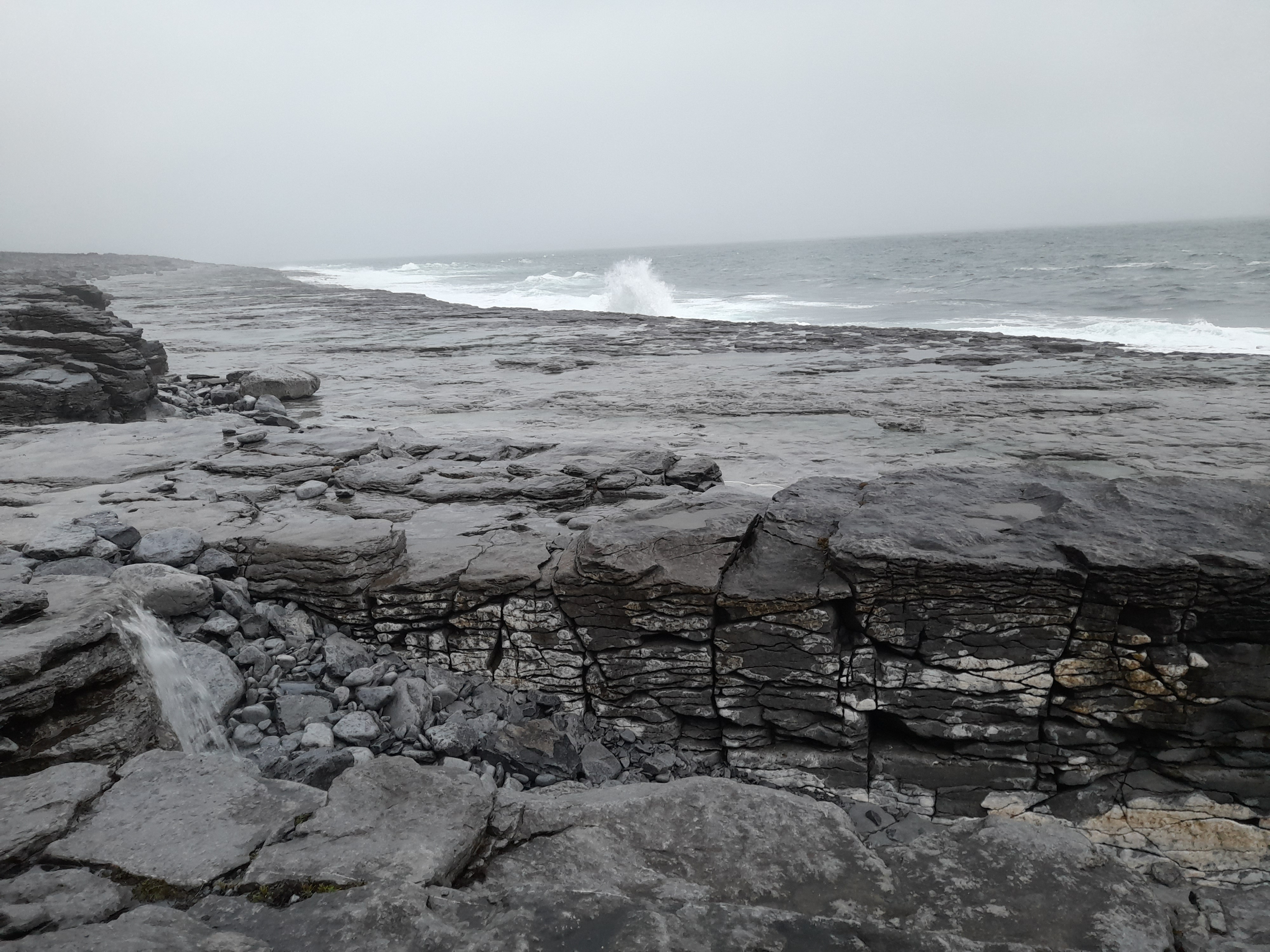
The drochaimsir (bad weather) came. It was here when I got back after the extended Christmas break. My expectations of the drochaimisr had been of storms, hurricanes, driving rain and blizzards but such dramatics are not Inis Meáin’s style. No, as was more befitting this island, the drochaimsir presented as something far quieter and deceivingly discrete; a thick mist that cloaked the island and obscured everything beyond the garden gate.
No Twelve Bins! Inis Oírr, vanished! The mainland, invisible. There is a lovely life to be had here, but contentment can be precarious and the islanders endure many’s the slog before the summer sun emerges. My first week back, in the midst of the mist, certainly felt like an endurance test. If the island’s first master is the sea, its second is the weather.
But when the sun came out and the mainland reappeared, I realised that the natural world – the landscape, the weather, the cycles, the sea – is far more than an external abstract beyond the island’s shores; it is part of the psyche.
The mist. How to describe the mist. You know it, if it ever came down while you were going up a mountain. Put frankly, it’s depressing. It’s not grey, but it’s not white either, and it blankets the island, blurring and dulling all. It lifts at the island’s edges, but everything in its wake is left a silver shade of grey. It must absorb sound because the island was silent, eerily calm, the days the mist was down.
It’s not like it’s a tsunami or a hurricane that wreaks havoc and yet, doing anything when it’s down requires an extra layer of effort to even bother. Rain is an excuse not to go walking, wind an excuse not to go swimming, but the mist is an excuse for nothing – and yet, ignoring it and continuing on as normal feels like a feat of mental endurance. Not being able to see the mainland adds a sense of isolation to the melting pot of woes, whilst the lack of sky or sun is quite the rebuke to our efforts at well-being.
Just what everyone needed in a third lockdown. Indeed, if COVID took the form of weather, it’d be that damned mist.
Now, it doesn’t go on forever. On a Thursday I think it was, the sun came out and the mood of the island rose with it. Dramatically, I fired open windows as wide as they would go – before closing them again fairly lively because, you know, January. The water around Inis Mór was a rich sapphire blue, the chimneys of the Moneypoint Power Station sparkled in the distance and the sun shimmered off the ocean as far as the eye could see. Never had Connemara looked so lovely to me. At swimming, all we talked about was the better form we all were in.
I had been bereft at the loss of the landscape, no matter how temporary I knew it to be. I had no heed on writing a word, on reading, or doing the things that normally I loved. I just wasn’t arsed doing anything when outside looked like that. I was missing my muse, my inspiration.
Yeats had Maude Gonne. It appears I have the west Clare coast.
My imagination is fired up by this landscape. If I have any half-decent ideas, they’ve come to me while staring at the Cliffs of Moher, or watching waves rise, tumble and crash ashore. And so, because writing – or notions of writing – involves a lot of staring out windows, when the sun came out, I moved my desk to a window.
Out that window is a view of the west Clare coast, between Fanore and Ballyvaughan, where Slieve Elva sweeps down into Galway Bay. It changes a hundred times a day (every landscape changes a hundred times a day, but we are scarcely ever minded to look). Yesterday Slieve Elva was gold in the sun’s light. An hour ago, the sea was silver and the hulking mountain a deep purple. Now the sea is sky-blue with ribbons of white swell running through it, and the lighthouse at Black Head is glistening in the sun.
And now, at last, work is getting done.
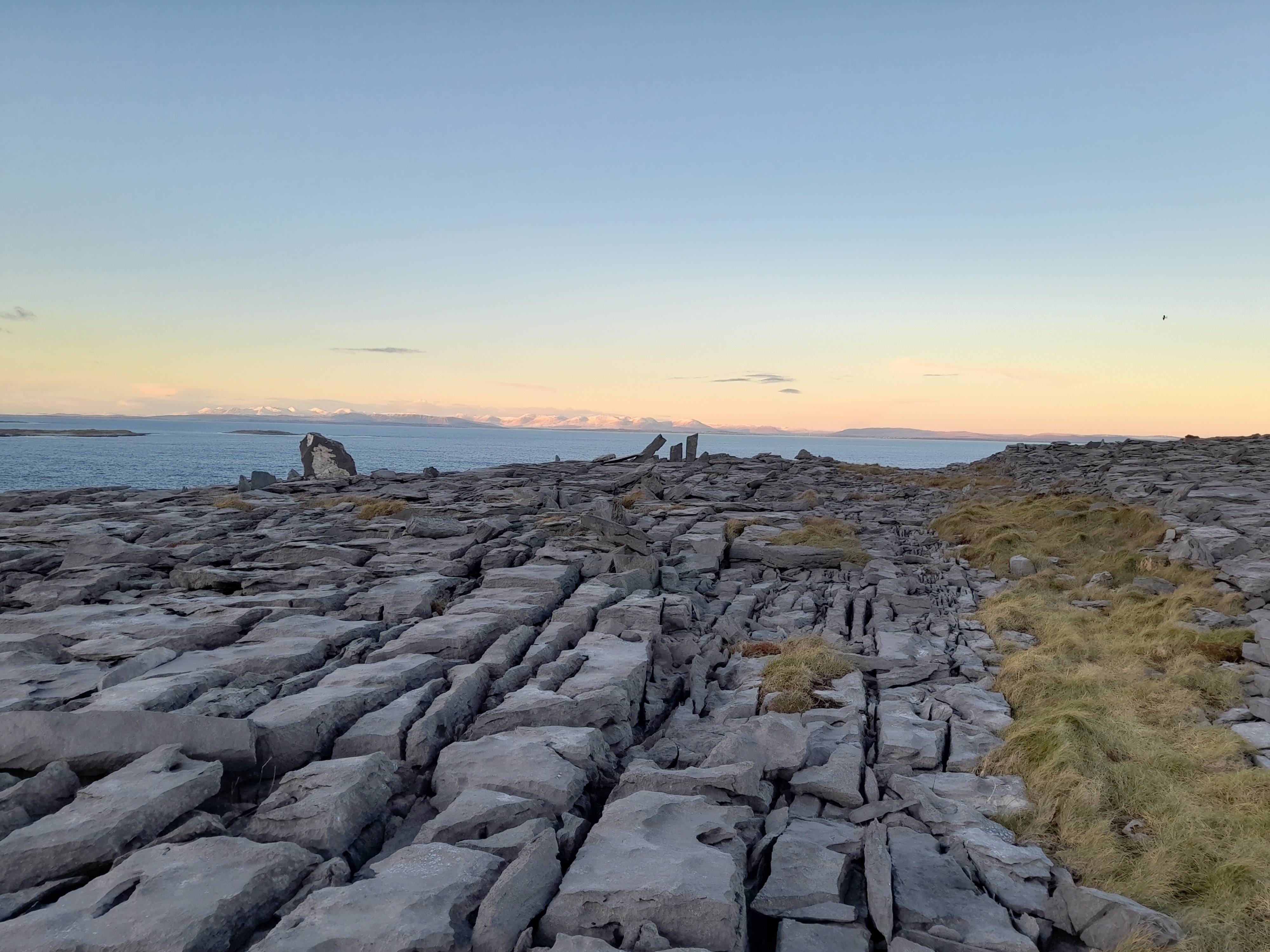
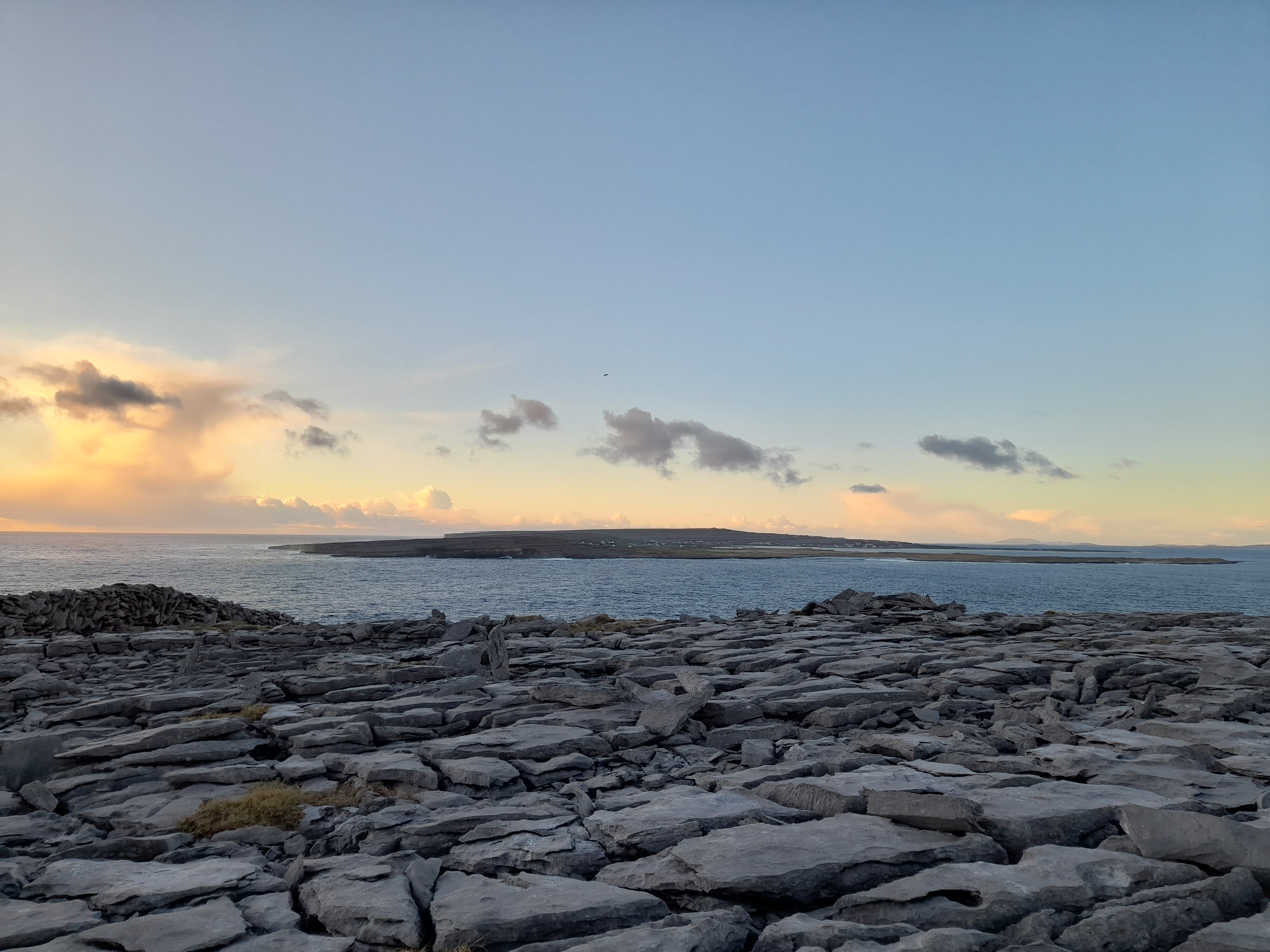
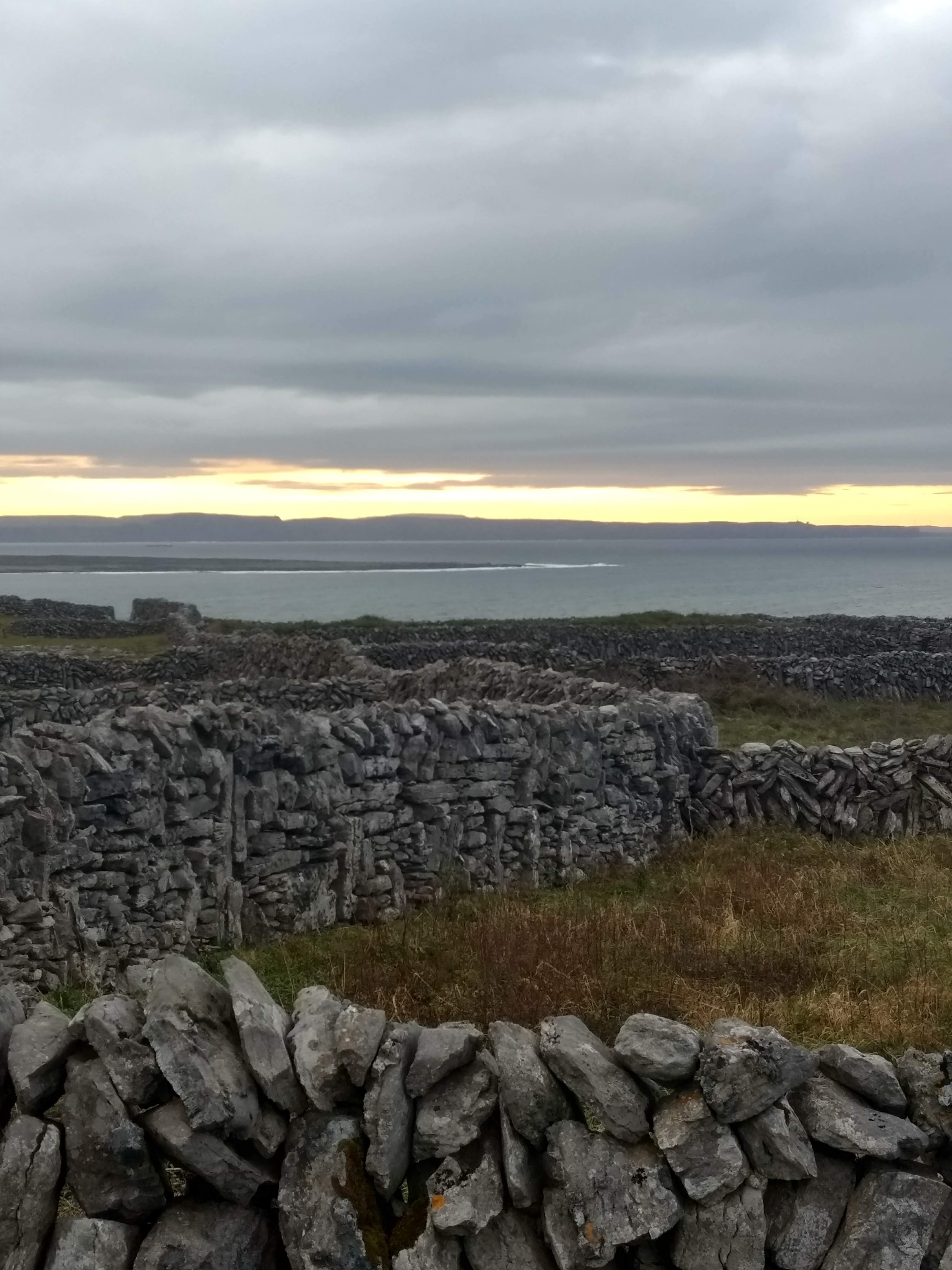
But there’s also a spiritual element to my appreciation of the landscape, of the natural beauty. The islanders are well attuned to the majesty and power of nature. The sea defines what can and cannot be done, where we go and when, who we turn to, who we trust. The weather can lift or sink the island’s mood. There is a necessary respect for what we consume and where it comes from because of the hassle of getting it here. Plans are devised with tides, winds and moons in mind. Nature is respected, not challenged.
Being here and bearing witness daily to nature’s power and beauty, I’ve come to see the natural world as others see God; a greater power to be appreciated, taken care of, respected and revered. Recognising my own insignificance in the grand scheme of things brings me calm. The north Atlantic does free mindfulness courses twenty-four hours a day, no bookings required.
I take a lot of comfort from – and try to apply to my own life – nature’s most basic truth; that the dawn follows the dark of night, the sun always rises, and sooner or later the mist will lift. Or, as a far smarter person explained it,
Our minds, like our bodies, are in continual flux; something is hourly lost, and something acquired. To lose much at once is inconvenient to either, but while the vital power remains uninjured, nature will find the means of reparation.
Samuel Johnson, The History of Rasselas, Prince of Abyssinia (1759)
Samuel Johnson would’ve had a great time on Inis Meáin.
So now, there you have it. The mist came, reminded me that island living requires a bit of resilience and resourcefulness. It’s like the landscape and I broke up for a while, got back together and are now tighter than ever. The mist went; it will return, to be endured anew. But somewhere out there, the vaccine summer beckons, and brighter times await. And this too shall pass.
Follow me on Twitter, I’m great craic. Or put the kettle on and click on the homepage to browse nearly sixty other posts on subjects as diverse as swimming in the sea, US politics, the bog and places I’ve seen or been. You can also search by category at the top of the homepage. Your comments and feedback are always appreciated.

 doireann.ie
How do you do it Doireann? Your language and descriptions are spot on! It sums up perfectly the interminable days of mist when all our moods were low and the sky was sitting on our heads. And then it lifted and we were instantly lighter and happier.
LikeLike
Ah thanks Anne, glad you enjoyed it!
LikeLike