
Springfield, IL is the state capital of Illinois. It has no nuclear powerplant, but Abraham Lincoln is buried there and it is home to the Illinois legislative assembly or State Capitol. Fun fact: there are thirty-three Springfields in the United States. This Springfield, once upon a time, was an impressive place but now it’s effectively a museum to its own past. It’s about the size of Sligo, with a population similar to that of Cork City and is located on historic Route 66. I spent three days there (though three hours would have covered a lot of the bases) and I’m glad I did because I caught a glimpse of life in a mid-sized midwestern town and learned that similar to home, the real heroes of small/mid-sized towns are those who stay there, set up businesses, organize farmers’ markets and mural painting. They are the bridge between the perception of a prosperous past and the reality of now. I saw also saw Lincoln’s grave. And toured the state capitol. I also ate something called a horseshoe, the local delicacy, which is basically a sandwich with cheese sauce poured over it.
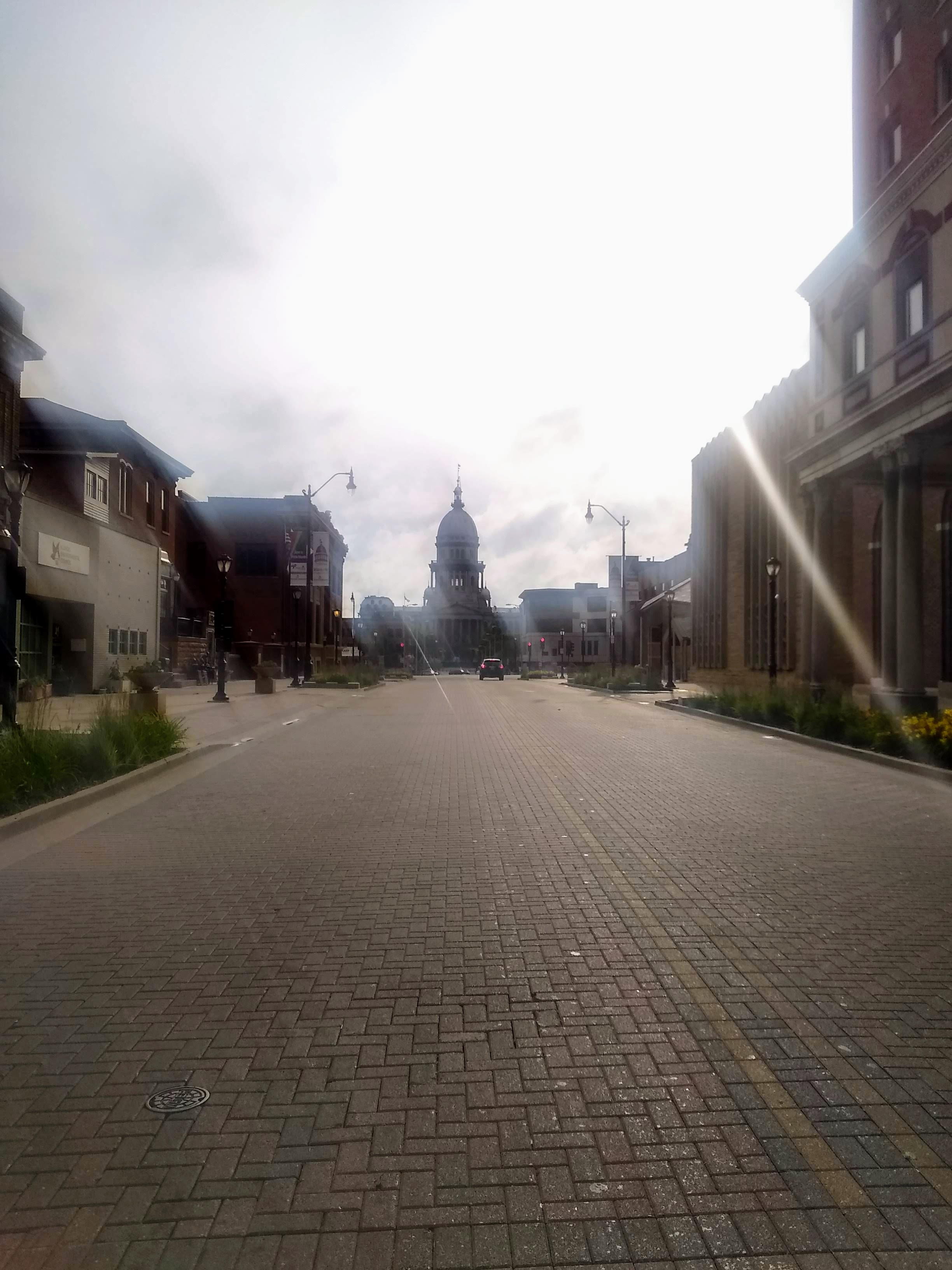
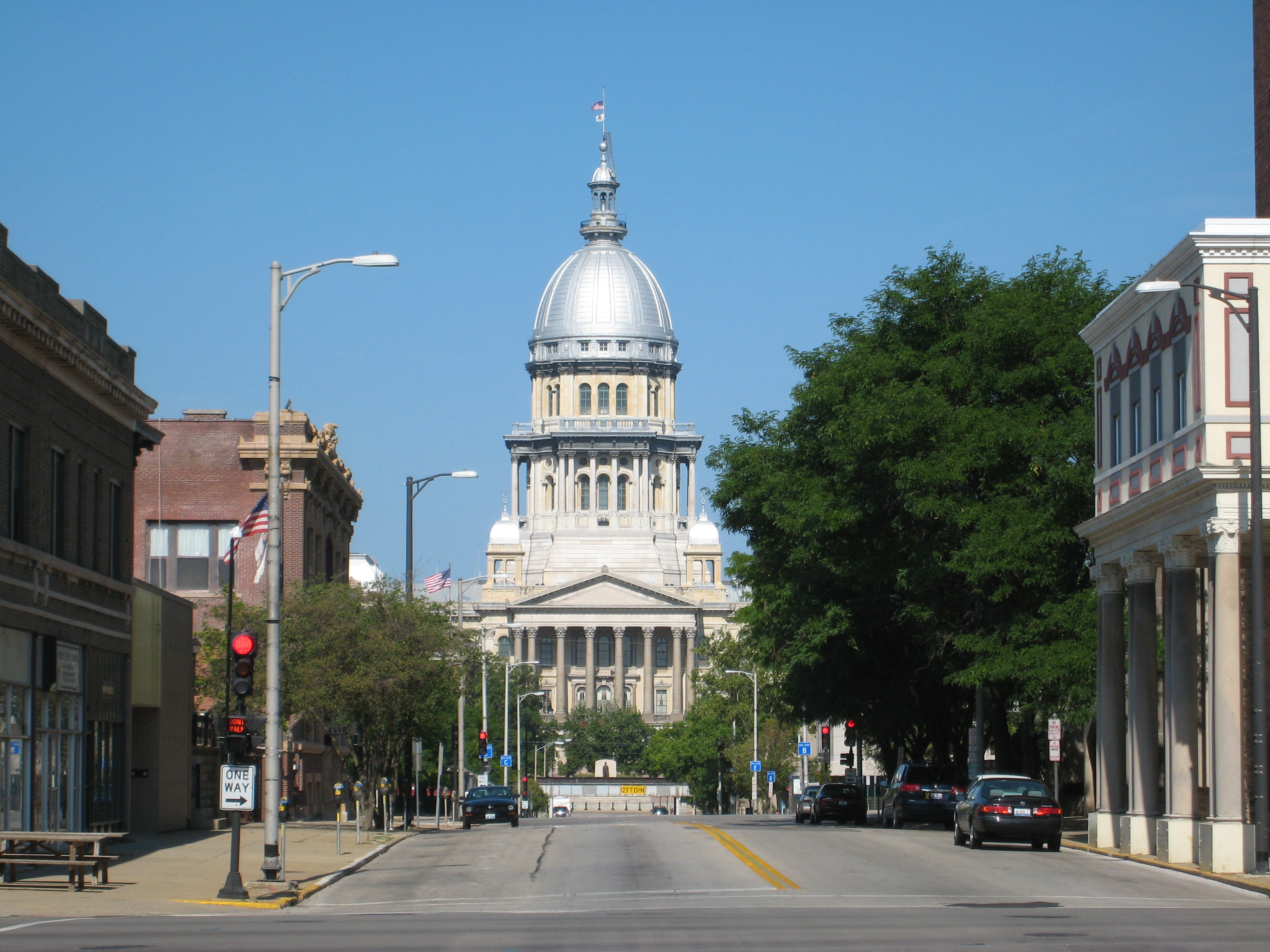
Terrible picture on the left but note the lack of people. Capitol Ave. on the right and the State Capitol which has the tallest dome of any US state capitol building.
A meticulously planned town with wide avenues and numbered streets, Springfield revolves around the State Capitol building. Capitol Avenue runs the length of the town from the capitol’s steps like a rolled-out carpet. There are statues and plaques everywhere, and the architecture points to a proud economic past that thrived with the frontier’s expansion westward. There appears to have been little shortage of money in post-civil war Springfield because the state capitol, begun in the 1870s, is magnificent and on par with what you’d expect to find in Europe. It has sumptuous legislative chambers, halls that could be found in Versailles and colossal murals telling (some of) the state’s story. Lincoln’s tomb is about a mile and a half outside of town, he and his family nestled under a large cenotaph adorned with states’ crests and a statue of him with the Emancipation Proclamation in hand.
Side note: Visiting the graves of famous people is something I do. Lincoln’s tomb gets a solid 8/10, which means it’s impressive and certainly worth seeing but it doesn’t compare to the crypt of Ho Chi Minh in Hanoi, Vietnam which gets 10/10 because you can see the actual body. Now, a 9/10 would be O’Connell’s crypt in Glasnevin or Che Guevara’s mausoleum in Santa Clara where you can touch the coffin or door to the tomb. An eternal flame could get you a 7/10 score though (hello JFK, Ghandi) though sometimes simplicity can blow the whole scoring system out of the water, as with Elvis or more so, Bobby Kennedy. Guards being pains in the ass also loses the dead marks – I’m looking at you Fidel Castro – as does people kissing headstones (poor Oscar Wilde). Looks like I’ve an idea for next week’s blog…
Markham 2019.
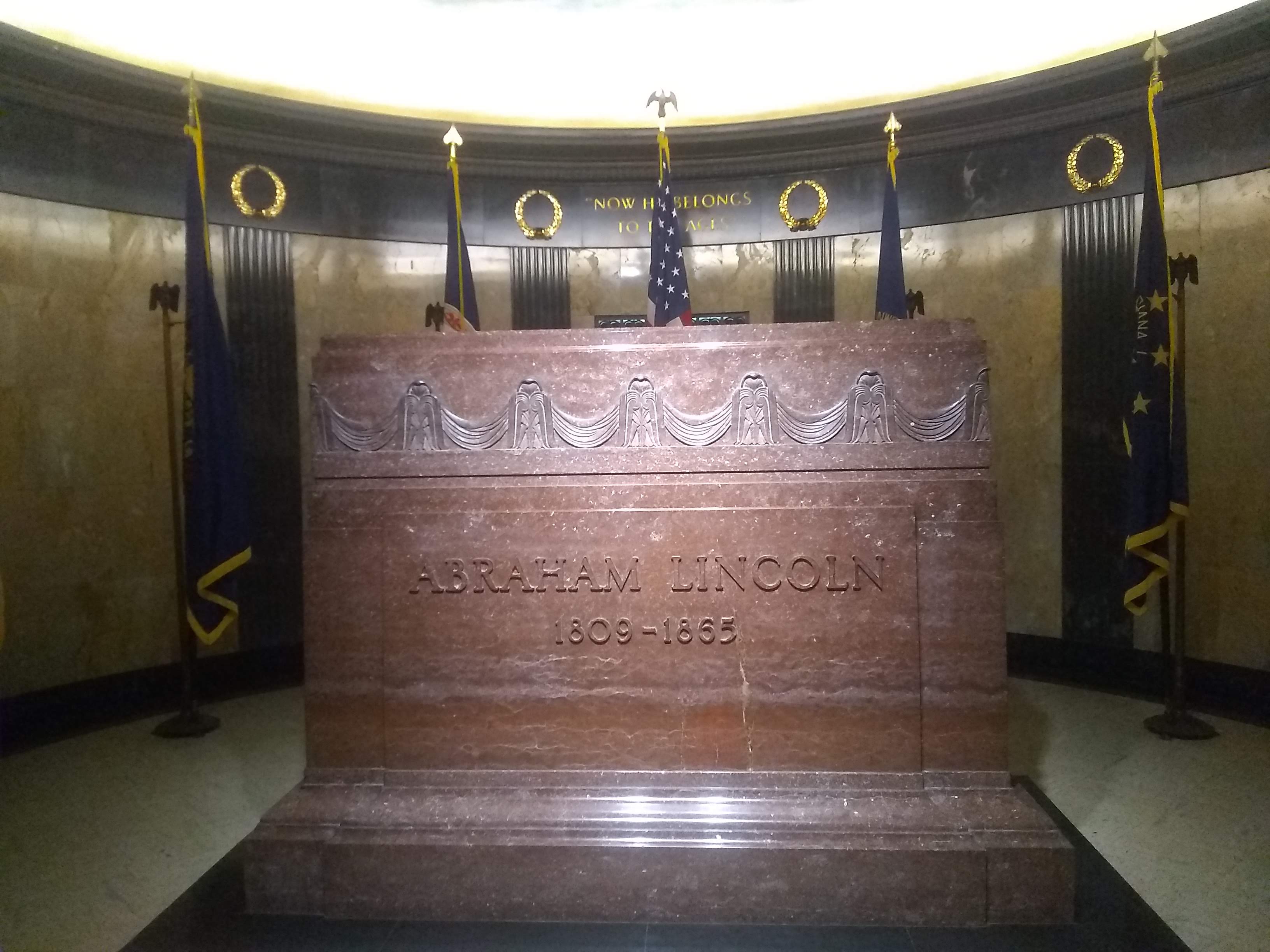
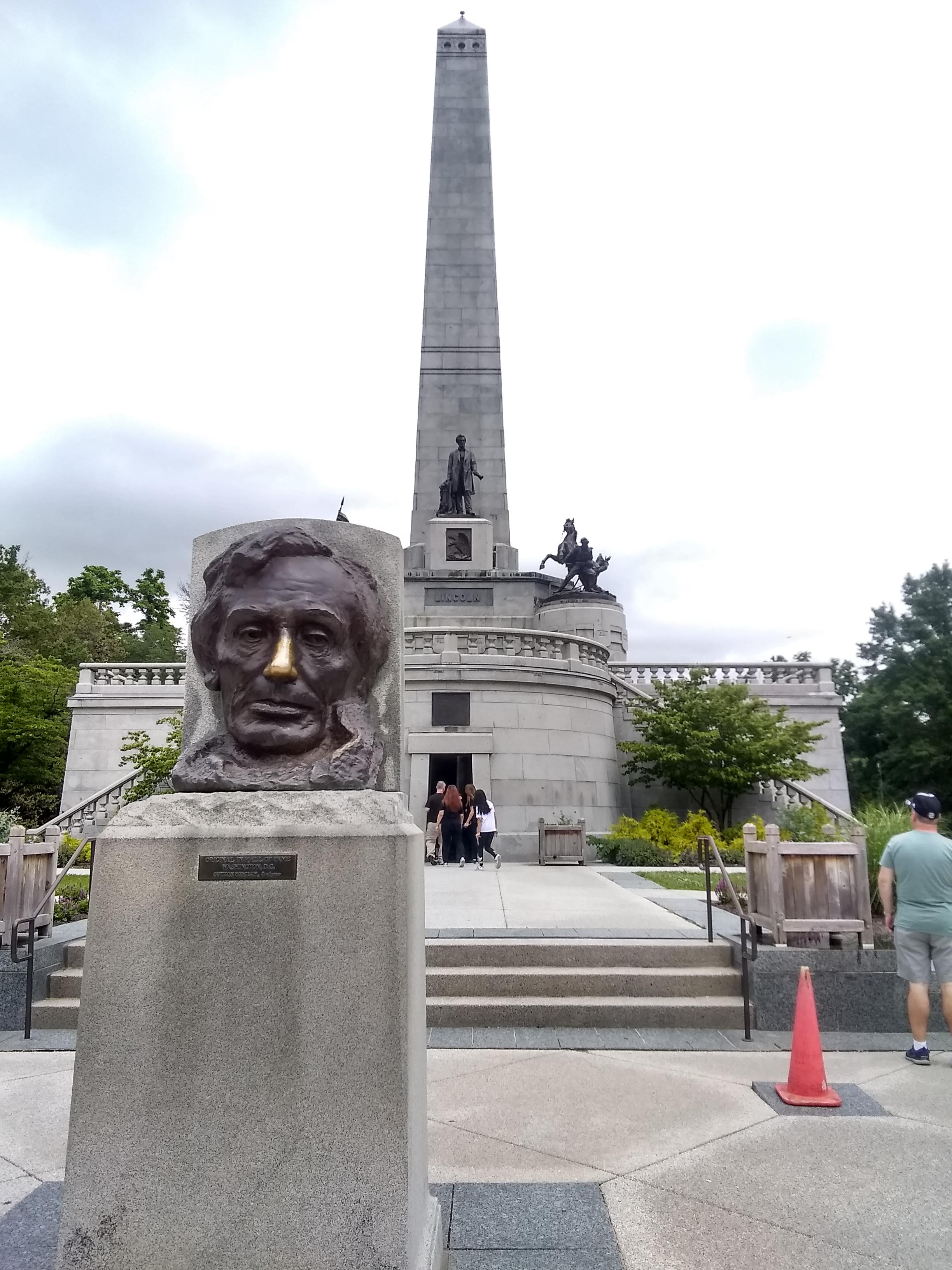
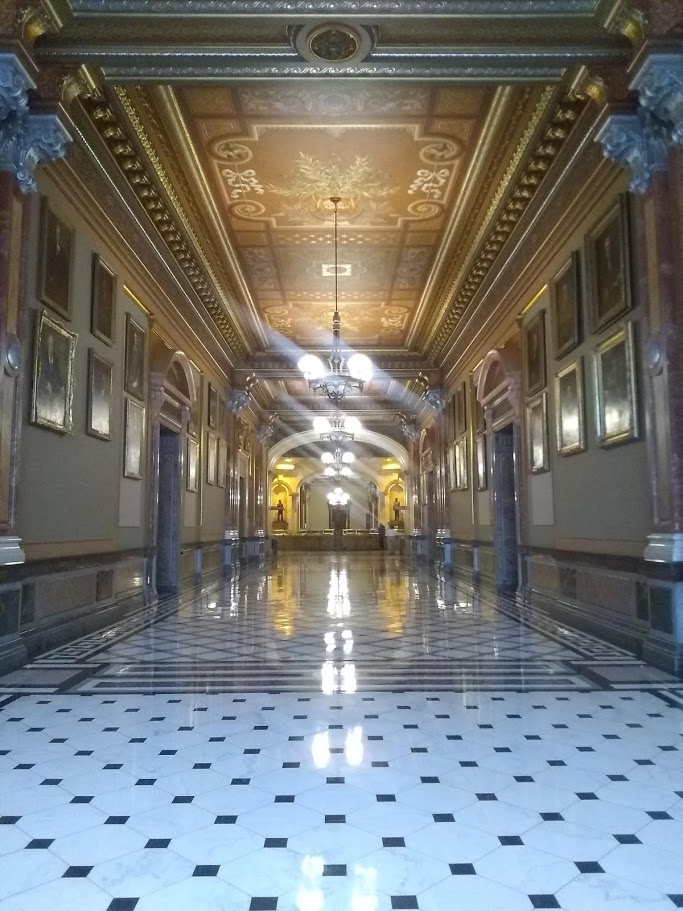
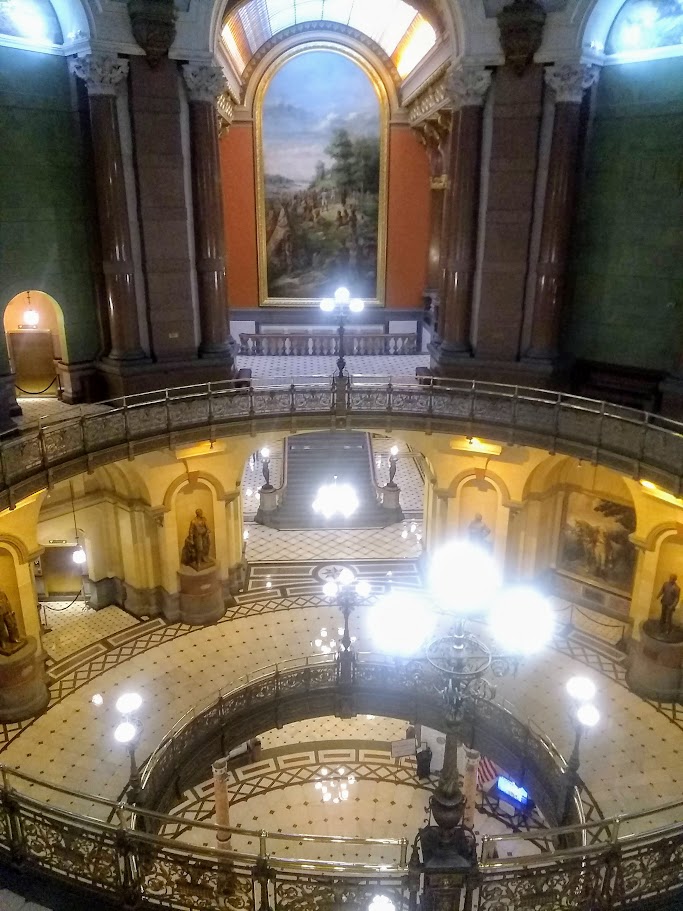
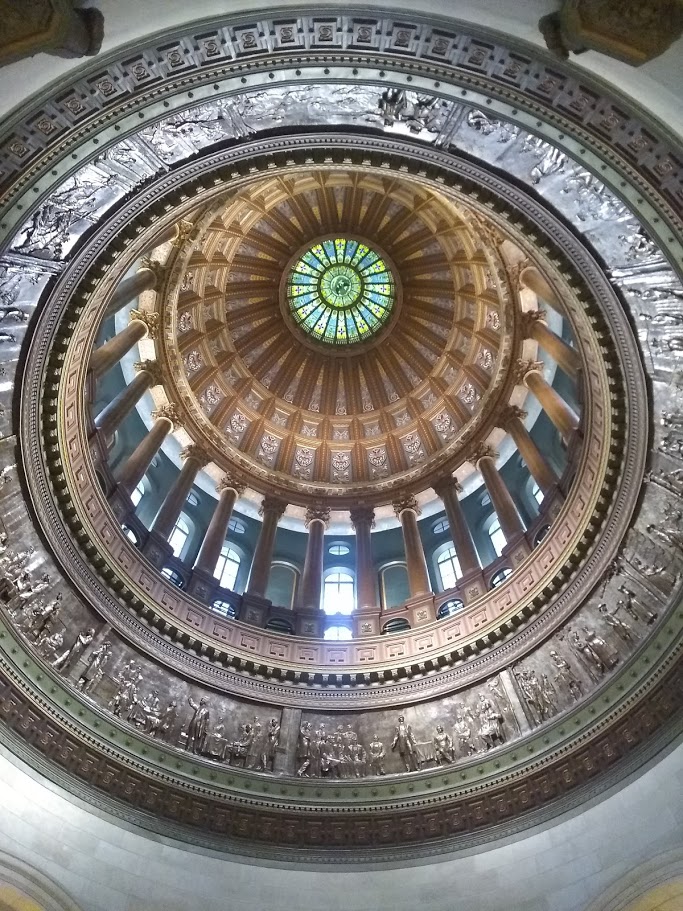
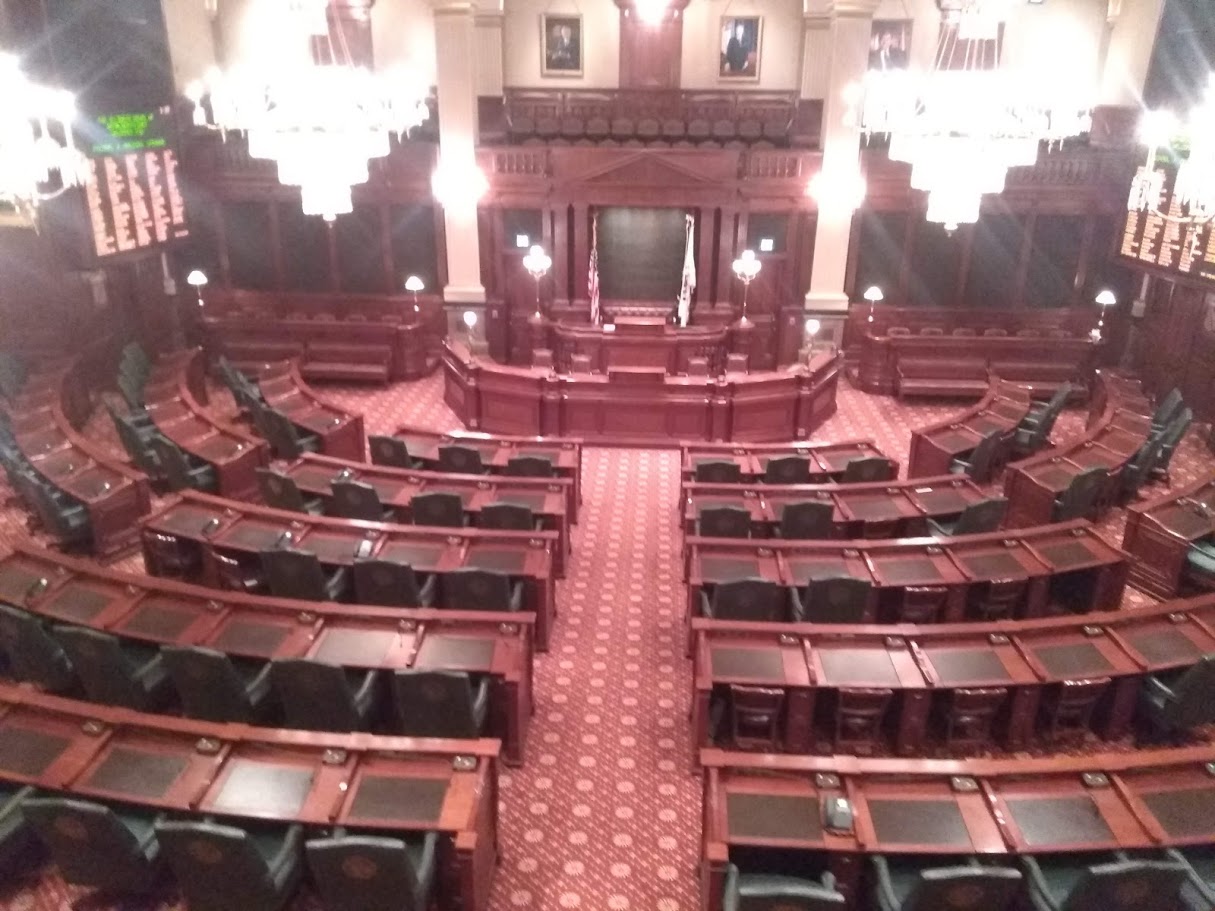
Clockwise from top left – Lincoln’s tomb; the exterior of the monument where Lincoln’s nose has changed color from being rubbed for good luck; Senate chamber of Illinois State Capitol (Obama was a state senator from 1997 – 2004); the dome of the state capitol, view of the rotunda and some random hall that looks like it belongs in a palace. ‘A lot less would do’ as my granny would say….
Anyhoo, Lincoln tomb; 8/10. In 2005 the Lincoln Presidential Museum and Library opened in Springfield, having previously been housed in the Ford Theatre where he was shot (harsh, if you ask me, get the man a building other than the one he was shot in, he kept the Union intact for God’s sake). Much of America can generally agree that Lincoln was a good guy (don’t @ me) so corporate money has been absolutely fired at this museum to galvanise national pride. As with many museums in the US, the point is not commemoration of a person or group, but to reinforce the narrative that only in the US could their story happen – land of the free and brave and great and all that. It is very entertaining though, with hologram theatrical presentations and no end of gimmicks to show you how great Lincoln was. And to be fair to him, he was some man for one man.
And yet, Springfield is a ghost town. It is remarkable how few people are around. I spent forty minutes looking for a coffee shop and I estimated that every second shopfront was closed up. Cars pass through, of course, but too few to bother waiting for a green light before crossing. The quiet is deafening; the horn of a passing evening train howls through the town, bouncing off empty walls and streets that offer little to absorb its roar. Ditto for motorcycles. I went for a beer or two on Friday evening and there was maybe twenty people in the bar, but I think they were passers-through rather than locals. This is a town the size of Sligo I’m talking about. It was strange and vaguely eerie, but later in the evening sitting on the sidewalk with a beer, I copped that I’d seen this before. El Paso and Albuquerque also had town centres so deserted that evening walks on the main streets were disquieting. I think we’re doing a bit better in Ireland; plenty of towns are struggling in Ireland but never deserted to the point of being intimidating, unlike US towns/cities the size of Galway. There are a million qualifying factors to that of course, population dispersal, economic concerns and out-of-town shopping centres etc. but the point still stands.
Besides the amount of reading that gets done, one benefit to spending three days in small towns is the appreciation gained for those who keep communities going. The Lincolns did their bit for Springfield, but such towns are kept alive by those who can stay, who establish small businesses or organize the farmers’ market or paint the street murals. I went to bed early on Friday night – the social life isn’t great in 2.5-star motels – and was up early on Saturday morning to walk to Oak Ridge cemetery. To my surprise I found a town (or sections of it) transformed. Two streets were cordoned off for a bustling farmers’ market. There was music being played and I’d to queue in the coffee shop for breakfast. The man who ran the coffee shop was a bit too assured and forward for my liking but heck, he had the right to be; his coffee shop had a queue in it and was buzzing with chatter. Later, when I came back from the cemetery (I’m clearly not the only one who’s interested in necro-tourism; there were more people in the tomb than I had seen downtown the day before) I could hear music and crowds near the old capitol building. The road (not the street, the actual road) was cordoned off and each family or group was given a square box to paint and design – pure shlobberin’ of course, but what a great way of getting people downtown and mixing, while adding a splash of colour. In every town there are people who won’t take decline lying down and nowhere was that more evident than in the home of Lincoln where the real heroes were the ones who’ll never get a statue.
So much of visiting cities is following the tourist map to reach a pre-ordained narrative, i.e. coming away with the impression of Dublin that Fáilte Ireland wanted you to come away with. And that’s grand like because it’s handy and sure how much can we really know about places without living in them? On my little trip to Springfield, I did do all the touristy things in Springfield but I also got a sense of life in a small midwestern US town and the importance of those stalwarts of the community that work so hard to make communities great again.
I also now have a clue what Spielberg’s 2012 Lincoln was about.
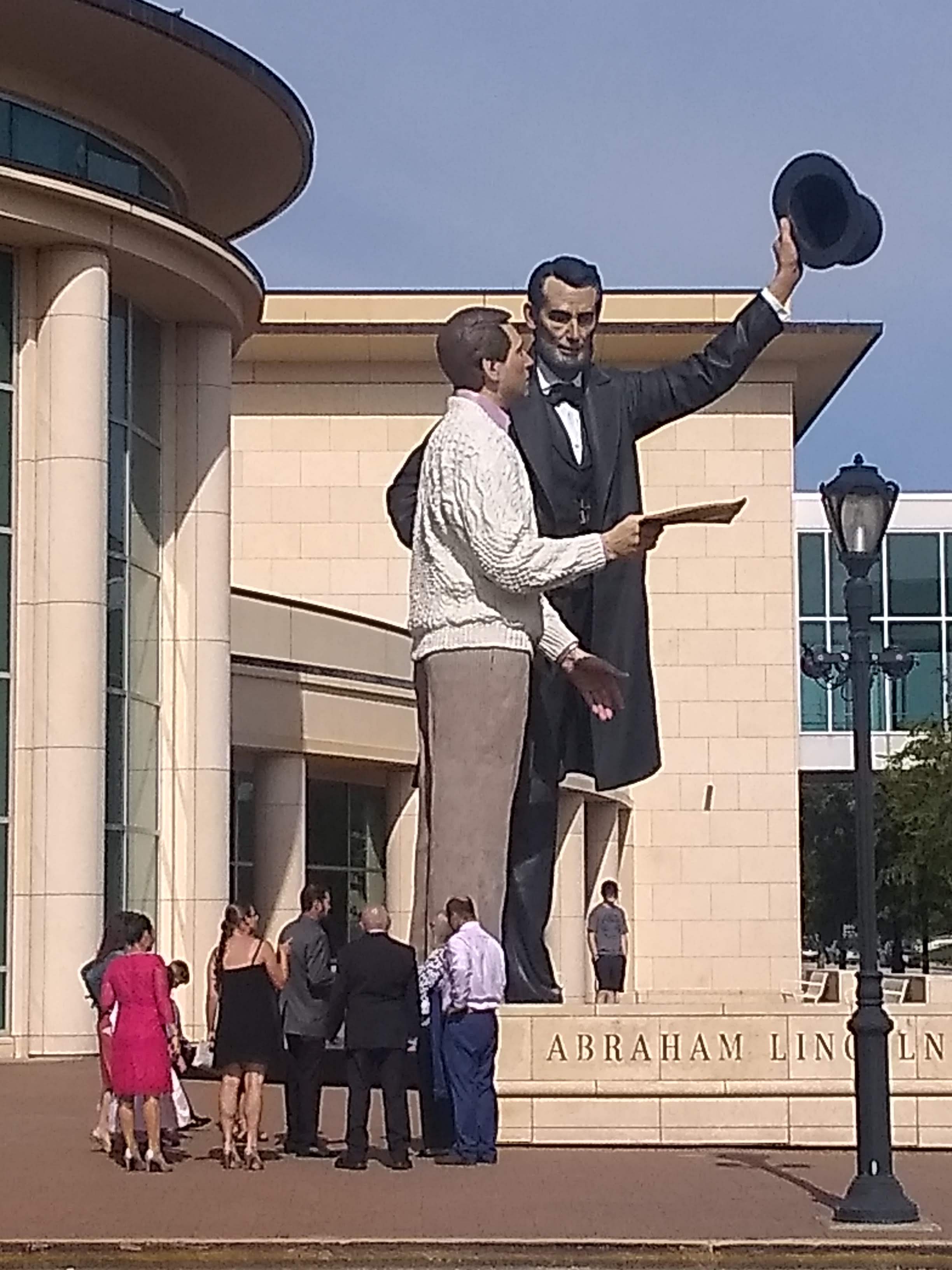
This ridiculous-looking statue had me roaring laughing; it’s Lincoln sharing the Emancipation Proclamation with ‘the common man’ (who happens to be the whitest white man that ever happened whiteness… I wish I had caught the runners in the picture). I presume it’s supposed to be part of the large moulded fiberglass sculptures that are placed as advertising icons, roadside attractions or for decorative purposes on significant interstate routes. There are loads of them along Route 66. They stand at 18–25 feet tall and advertise diners and car shops… not the 16th President of the United States and perhaps one of the most important document in the nation’s history. I’m so sorry to the artist but it’s literally one of the most ridiculous things I’ve ever seen and it brightened up my day with the mega-LOLs. (https://en.wikipedia.org/wiki/Muffler_Men for more on the Muffler Men statues.)

 doireann.ie