
Currently there are twenty-four contenders seeking the Democratic nomination to run in the 2020 presidential election, presumably against Trump. It’s a reverse of 2016 when sixteen candidates sought the Republican nomination to run against Hillary Clinton. The contests to win the nomination are called primaries, a series of localized elections where party delegates select the eventual candidate based on party members’ votes. The key to winning is name recognition (Joe Biden was leading in the polls before he even entered the race). But with 250m people eligible to vote in United States, getting the name out there is an expensive business. So how do candidates do it, and why must voters be wary of how they do it?
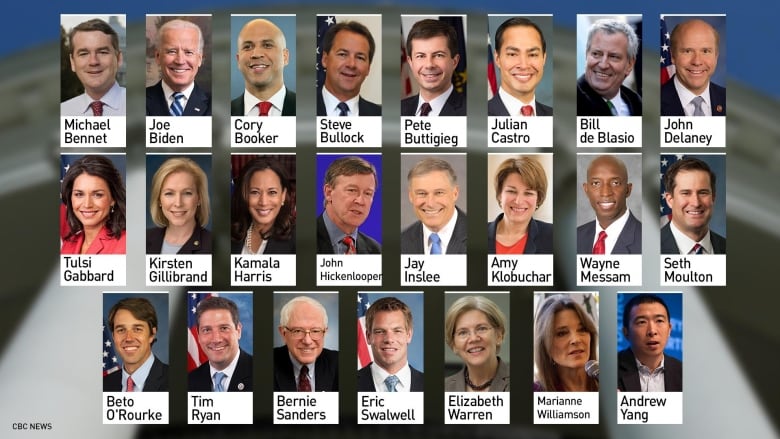
In a word, money. And for two reasons; advertising is expensive and because candidates must secure donations from at least 65,000 people across 20 different states for a place on the stage of the televised debates (26-27 June). I signed up to the email lists of several candidates out of curiosity and in the hope of getting to go along to some of those rallies I’d seen on the West Wing. Most candidates email daily, generally asking for money. The tone of the emails varies. Some are assertive, others vaguely desperate; a crusading email from a volunteer with a serious emotional investment in the candidate one day, a heartfelt few words from the candidate’s partner/mother/postman the next. If I give Elizabeth Warren $3 I might be chosen to go for a pint with her, Bernie Sanders is offering his book in exchange for $3 donations and most candidates have their own Pride merchandise (because nothing screams Go on the Gays! like Amy Klobaucher’s name across your ti… chest). Emails from the candidates about their passion for the issue of the day (which, in fairness have been serious issues like zero-hour contracts and abortion law) usually end with the hand out looking for more money. It is remarkable how easily candidates for the leadership of the free world could be mistaken for deposed princes who will pay you back as soon as their father’s kingdom is recovered.
Much of the money is spent on events that will increase name recognition, all with an eye to local and national polling. Televised debates attract massive viewership and are candidates’ first opportunity to speak directly to millions, to push themselves up further in the polls. These debates and the Iowa caucus are massively influential on candidates’ polling figures. But polls are notoriously unreliable and unscientific. People lie and because pollsters cannot ring mobile phones, it is difficult to reach a sample group that accurately reflects the electorate. Polling is also hugely reliant on name recognition rather than awareness or support for policies or ideas. Parties know this and that’s why, in Ireland anyways, former Roses of Tralee or former county footballers with no political experience at all are selected to run. The better a candidate does in polls; the more their seriously their candidature will be taken – even if they haven’t a single coherent idea or policy, as was the case in the 2018 Irish presidential election. The ultimate way to be taken seriously is to secure an early win in Iowa. Iowa’s party delegates are the first in the nation to vote on their candidate of choice and, knowing that victory there will make many voters sit up and take notice, candidates descend on the state for months beforehand eating corndogs (haven’t a clue) and addressing barn dances. Many of them are there now, even though the vote isn’t until February 2020. Similar to polling, success in Iowa is a highly unscientific measure of a candidate’s support; it is often stated claimed that the state is “too old, too rural and far too white to wield such clout”[1].
It’s good I suppose that so many candidates have the passion and drive to run for president but a crowded field of candidates clamoring for attention is a tinderbox for shite-shouting.
Shite-shouting ™ ; throwing out unsubstantiated, under-researched and unverified rhetoric to gain notoriety, usually at the expense of others. Such rhetoric usually involves convincing one section of the population that their dissatisfaction is not the result of multipart global, national, economic and social factors, but the fault of a minority.
™ D. Markham, 2019.
Shamefully, it works; all over the world incoherent egotists are elected over competent and committed candidates (I could name ten). Outlandishness draws attention, name recognition is achieved, the shite-shouter climbs in the polls and suddenly a whole lot more people start taking them seriously. Democrats define themselves as rising above nefarious and divisive rhetoric so these primaries are unlikely to descend into the embarrassment of the Republican primary of 2016 but no doubt, someone will succumb to the international media coverage that a controversial soundbite can achieve. It worked for Trump in the field of sixteen candidates in 2016. It succeeded because too few people asked themselves how they would feel if their community was scapegoated for the sake of a few headlines. Fewer still questioned what the candidate stood to gain by turning people upon each other. It will be interesting to see how these Democrat candidates will make themselves stand out throughout 2019 and 2020. Assuming they eschew Trumpian tactics, I expect the range of ideas and discussion to be fascinating and, just maybe, inspiring?
Even at this early stage, it’s certainly an interesting spectacle to watch. Political tactics are not new or original, the vehicles for them are (the internet, social media, mobile communication etc.) and trends shape them are but, sooner or later, what’s tried here will be tried in Ireland. Fear not! There’s no shortage of time for observing; the Democratic National Convention (where the candidate is confirmed) isn’t until July 2020 and when everyone collapses on the couch and reaches for a beer at that point, it all starts again for the actual presidential election in November 2020! It’s basically porn for politicos.
And I can’t wait.
[1] New York Times, 11 June 2019

 doireann.ie