
— Bob Dylan, Chronicles, Volume One
My brother came home from Malta once and summed up that nation’s history as, “sure everyone had a crack at Malta at some stage or another”. Well, the same is true-ish of New Orleans which has at various interludes been Spanish, French, British and American. Add to that the Creole traditions, the cultural influence of enslaved people who lived and passed through this port city, as well as the degenerates and adventurers the port of New Orleans drew in and you have a cultural melting pot… that someone laced with MDMA for Mardi Gras. New Orleans is above all else sensuous; the jazz hums, the Cajun spices tickle nostrils, the streets pulse, fingers are licked and the Mississippi reveals. But keep your eyes open throughout; slavery and the influence, culture and traditions of the enslaved are central features of New Orleans’ story. As is the trauma wrought by Katrina which, fourteen years on, still scars all. I had ten days in New Orleans in what was effectively two holidays: three days of Mardi Gras with mates and a distinctly quieter seven days flying solo.
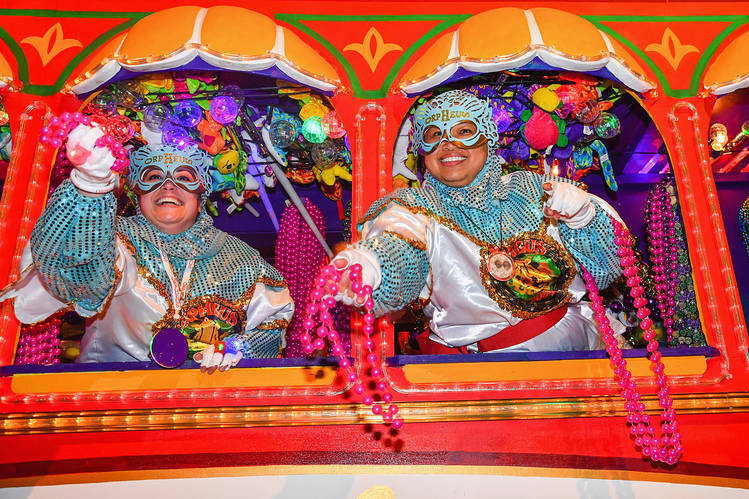
Mardi Gras (Fat Tuesday en français) is basically the world’s second biggest party – Rio de Janeiro’s carnival is the biggest – and it’s where chaos reigns supreme. Unlike St. Patrick’s Day, Mardi Gras isn’t a single day of events; it lasts for weeks, beginning with weekend parades in January and building up to daily parades as the day itself looms. Nor is it one colossal parade down the main boulevard; the parade in the New Orleans equivalent of Cabra is as spectacular as that in the city centre. Irish people give out all the time about how disgraceful we are on St. Patrick’s Day, puking into Mighty Macs on O’Connell St. but I tell you now, 17 March in Dublin is the Ballinlough Corpus Christi procession compared to Mardi Gras. The hardcore have reserved their kerbside space since mid-morning, gazebos and deckchairs at the ready and a box of cans ready to crack open. The rest of us check the app and spill out of the pubs as it’s about to begin. Each parade lasts about two hours at a time and MY GOD the raucous glory of it all! The floats are open-topped buses with volunteers throwing out strings of beads, plastic cups, souvenirs, teddies and whatever other branded tat is to hand. Each float blasts its own music and will be followed by school marching bands (à la Homecoming) or cheerleader/gymnastic groups dancing and twirling all around the place (and their absolute heroes of lunatic teachers keeping watch). You try to earn your beads by catching the eye of one of the people on the float but they’re more likely to miss or get you in the face (if you’re not paying attention) and the strings of coloured beads end up draping the tree branches for months as anarchy’s reminder. And when it all ends and the route is cleared of people, in come BULLDOZERS to clear the streets of the trash (no green bin there) Everyone will retire to the pub or, because drinking on the streets is legal, grab a ‘walking beer’ (all of my hopes and dreams, summed up in two magical words) and wander around – most likely looking for a clean loo.


After three days, we emerge from its reverie like survivors from the trenches into the sunlight and Mardi Gras stops Mardi Gras-ing. On Bourbon St. at midnight on Mardi Gras/Ash Wednesday police on horseback advance in formation to signal the end of the partying (obviously everyone goes back to it once they’ve left but as symbolic police gestures go, that’s a cool one). On Ash Wednesday as the city cleared, I got making plans. First step: check out the free tours on offer to get my bearings, and do all of them (the guides are singing for their suppers so you tip them at the end based on a. how good you thought they were and b. you not being a dick). The French Quarter is a haven of artistry and culture – it has long attracted the creative types and is the original part of the city; narrow streets with colourful houses and elegant shopfronts. Jazz was born here – a fusion of sounds that reflected the diversity of New Orleans’ population – and its ubiquity is simply a joy to behold with a cold beer and nobody trying to talk to you. Watching music is one of my favourite things to do and I saw as much music as I could every night in any of a million bars (though I especially liked Fritzl’s European Jazz Bar and want to marry the house band’s pianist, Richard Scott, who is the finest jazz pianist I have ever seen or heard. He’s not quite as keen on the idea). I knew I wanted to tour a cemetery or two in New Orleans – I do enjoy a good graveyard – and had such a good time with Martha the guide (there was only me and her) that the tour was nearly five hours instead of three and I didn’t notice myself burning so badly that the tracks on my neck remain. Before I left her, Martha told me to be sure and ‘spend some time with the river’ – phrasing I considered unusual – but she was spot-on and pondering life’s imponderables by the Mississippi was a worthy investment of several hours. I was down there one evening and I caught a jazz funeral, which is a funeral procession accompanied by a brass band and is a New Orleans tradition. New Orleans offers so much but when the body is languorous, the evening balmy and the clarinet enchanting it is inevitable another beer will be ordered and the afternoon’s plans postponed, and sure there goes another day and shucks you’ll just have to come back to New Orleans another time.
I reckon that’s how they get you back see.
But the other side of New Orleans is that she is grieving, and her stoicism masks her trauma. In August 2005 Hurricane Katrina made landfall in Florida and Louisiana and left in its wake untold destruction. Katrina’s scarring is everywhere. It’s in the etiquette of never asking anyone about their experience of Katrina, instead waiting for stories to be volunteered and shutting-up when they are. It’s on the surviving X-codes or “search codes” codes on the outsides of houses that denoted the time and date the search team arrived, the hazards found within and at the bottom of the X the numbers of people found alive and dead inside. It is in the horror of stories that came from the Superdome where people had been trapped without sanitation for five days. That happened in America, less than fifteen years ago. In America, ‘the west’, the first world, whatever we call it. New Orleans governance has long been bedevilled by incompetence and corruption, but locals shrug at its worst excesses and persevere in doing what they can for their city. I met a teacher last time I was there who told me she had nineteen students in her class but only eighteen chairs, so they rota-ed the chairs. And – of course – the much of the city’s prosperity was built on the backs of enslaved peoples, on the buying and selling of human beings as property. This city’s people have rebuilt themselves and their lives time and time again, and I read somewhere that the city thrives on the idea that the whole is greater than the sum of its parts. It feels disrespectful to such efforts to not interact with New Orleans’ more challenging side and though the Katrina Museum was little short of harrowing ,we must know and recognize the heroics of those who survived and managed to rebuild their lives and communities. America, 2005. It wasn’t a hundred years ago.
Go. If there’s one city to go to in America, it’s New Orleans. Ideally go to a load of them like, but if there’s only one, it’s New Orleans. Interact with it; it has a lot to teach us all about America and how we become the people and communities we are. New Orleans wants to feed us, entertain us, shock us and beguile us. And it will, in spades. When I go somewhere, I want to learn something, I want to broaden my knowledge and if I go back to New Orleans a hundred times before I die there’ll be more to learn. Because New Orleans doesn’t want to let you away with some boozy nights singing karaoke on Bourbon St. and drinking Bud Light; it has too much to teach you about race and culture and art and music and joy and sorrow, and it’s up to you to grab it. Will I be back? Oh yes.
To quote Joyce, “Yes I Said Yes I Will Yes”.

 doireann.ie
Could not agree more! This is my favorite place on the planet! XOXO NOLA
LikeLike